Academic Science — Montenegro

About
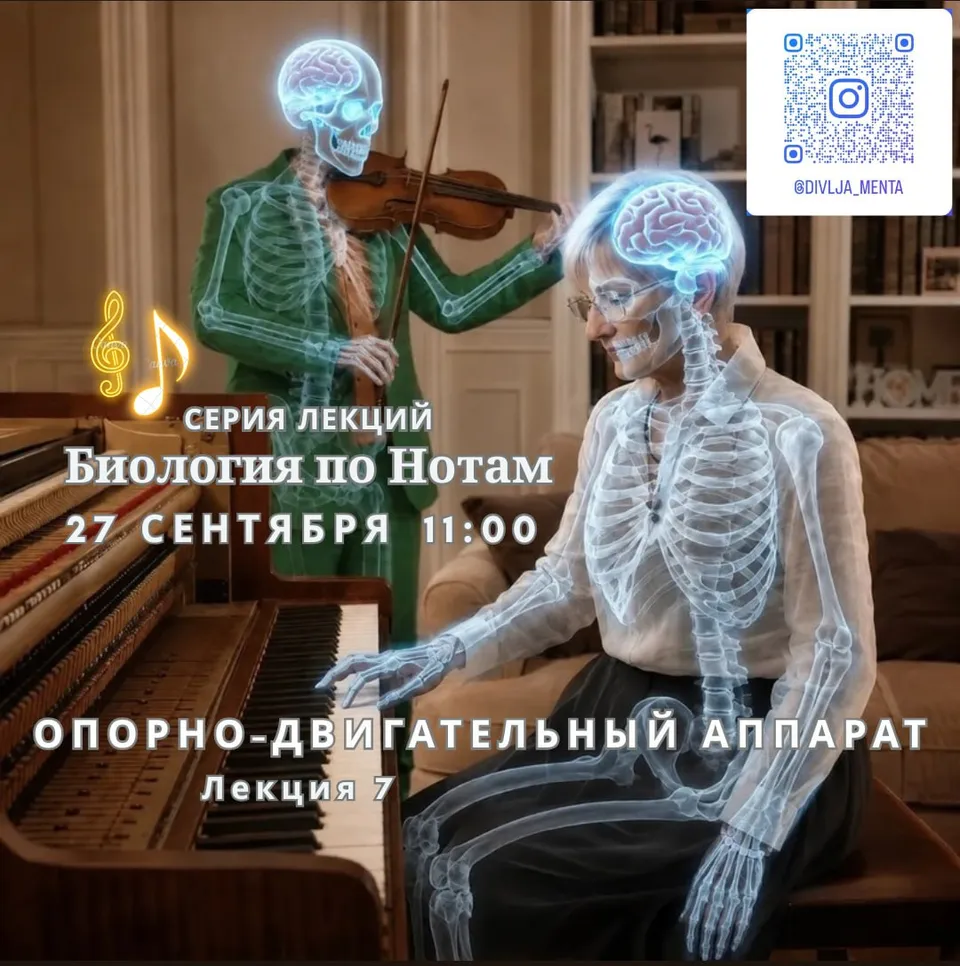
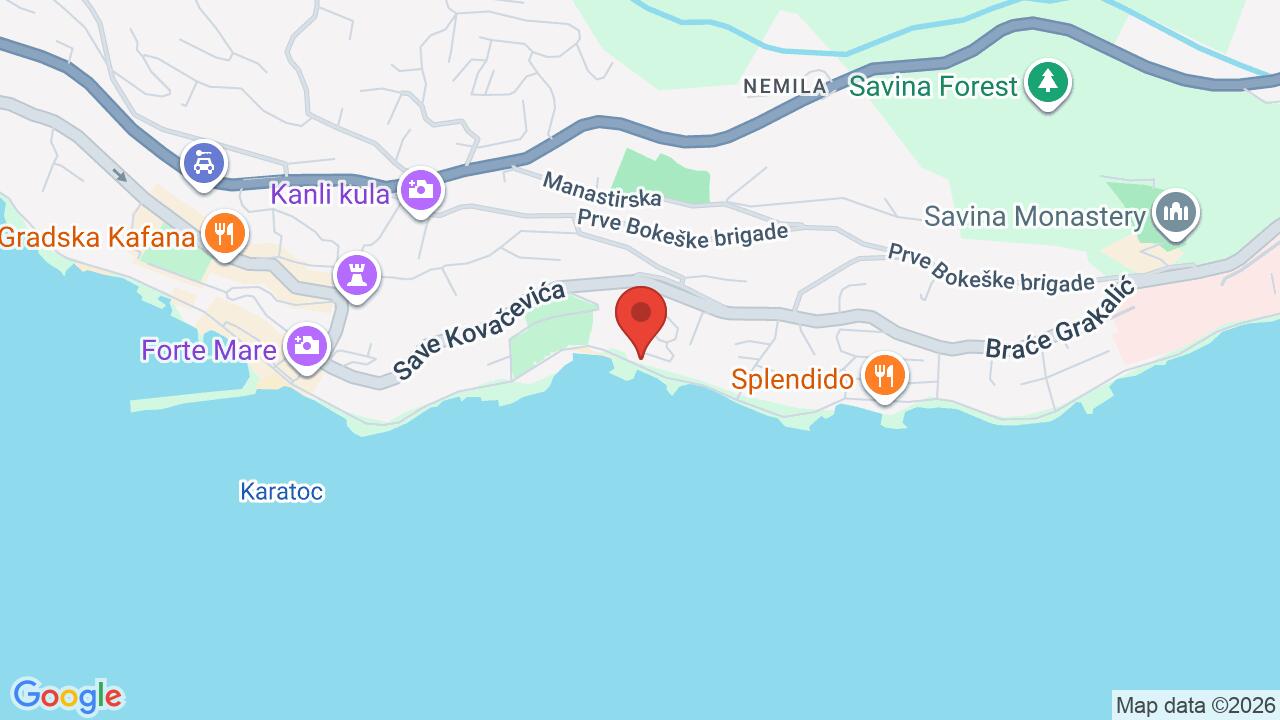
Organizer: Divlja Menta On 27 September at 11:00 in Herceg Novi at Divlja Menta there will be a lecture about the musculoskeletal system. Children aged 8–15 will learn how bones and muscles enable movement, how the brain controls this mechanics, how piano and violin skeletons are built, and how moisture and temperature affect these instruments. Entry: 10 EUR. This announcement was found and posted by KiddoDoo editors. Like it and we will find out all the details and exact schedule. 27 September at 11:00 in Herceg Novi there will be an event at Divlja Menta. At lecture #7 we will introduce you to the musculoskeletal system. ☠️ Of course you already know something about it. 🤔 Few people have never broken at least one bone!💪🏻 Come and you will learn: 🦵🏻how bones and muscles “serve” the harmony of movement, 🧠how our brain controls this complex mechanics, 🎹🎻how the skeleton of a piano and a violin is arranged, 💦🌡How moisture and temperature affect these musical instruments. Children from 8–15 years, but we also expect adults. This is exclusive knowledge. 😉 Entrance: 10 EUR Registration: telegram link 📍 Divlja Menta (link)
Q&A:
Most questions are answered by the organizer, but community members can also answer.
Contacts
Kiddodoo MessagesSchedule & Booking:
We verified the schedule less than 24 hours ago. Book with confidence, guaranteed best price.
Skills & Interests
Everything related to body and movement. These are activities aimed at physical development and maintaining good health, as well as those that help children relax, release stress, or express their natural need for movement. Physical activities are part of the basic recommended “balance” for every child.
more «physical development» →Although biology is not usually taught as a separate subject in primary school, children are often fascinated by biologists’ stories, learning to observe the microworld through a microscope and to recognize different species of plants and animals, learning secrets about everything. Adding biology elements to walks, activities, and experiments is not only engaging, but also helps spark a lasting interest in the natural sciences.
more «biology» →Activities centered around music that develop listening skills, sense of rhythm, attention, memory, coordination, musicality, and self-expression — through listening and playful interaction as well as learning music theory, playing instruments, or singing. Over time, musicality becomes more than a skill: it becomes a way to experience joy, process emotions, feel part of a group, and find support in music throughout life.
more «music» →Academic Science covers content taught within England's standard general-education curriculum. The tag also applies to home, online, or private tutoring when it follows that curriculum; extracurricular and specialist content outside it is excluded.
more «Academic Science» →Where?
Run activities for kids?
Reach families who are a real match. Post your classes, camps and programs to the open catalog. Kiddodoo shows them to parents whose children are genuinely exploring what you offer, not just anyone within 5 km.
Get startedThis page is from the Kid-do-doo app. Install the app to see the details.
Parenting, made clearer — and less scattered
Understand what may be happening with your child — and find real-world ways to support the next step.
This page is from the Kid-do-doo app. Install the app to see the details.
Parenting, made clearer — and less scattered
Understand what may be happening with your child — and find real-world ways to support the next step.
Schedule:
We verified the schedule less than 24 hours ago. Book with confidence, guaranteed best price.

About
Organizer: Студия О2: керамика, воркшопы, встречи, праздники From Oct 11, 2026 in Podgorica every Sunday — a Science Club for children 3–5 years with arithmetic led by Katya Gershtein. Sessions run 15:00–16:30. Trial €5, single €10, 4-class pass €30. This announcement was found and posted by KiddoDoo editors. Like it and we will find out all the details and exact schedule. Katya Gershtein telegram link 17:00-18:30 Science Club 3-5 years (with arithmetic) €5 — trial, €10 — single session, €30 — unlimited pass for any 4 classes Sign up without hassle on KiddoDo or via the organizer's direct message: telegram link
Q&A:
Most questions are answered by the organizer, but community members can also answer.
Contacts
Kiddodoo MessagesSchedule & Booking:
We verified the schedule less than 24 hours ago. Book with confidence, guaranteed best price.
Skills & Interests
Сhildren explore science through hands-on experience: observing, mixing, testing hypotheses, and discovering cause-and-effect relationships. They satisfy children’s natural curiosity, develop logical thinking and fine motor skills, and show that science can be practical, understandable, and engaging.
more «lab experiments» →Evaluating evidence, assumptions, and reliability; not merely applying logical rules.
more «Critical thinking» →Academic Mathematics covers content taught within England's standard general-education curriculum. The tag also applies to home, online, or private tutoring when it follows that curriculum; extracurricular and specialist content outside it is excluded.
more «Academic Mathematics» →Academic Science covers content taught within England's standard general-education curriculum. The tag also applies to home, online, or private tutoring when it follows that curriculum; extracurricular and specialist content outside it is excluded.
more «Academic Science» →Where?

Run activities for kids?
Reach families who are a real match. Post your classes, camps and programs to the open catalog. Kiddodoo shows them to parents whose children are genuinely exploring what you offer, not just anyone within 5 km.
Get startedThis page is from the Kid-do-doo app. Install the app to see the details.
Parenting, made clearer — and less scattered
Understand what may be happening with your child — and find real-world ways to support the next step.
This page is from the Kid-do-doo app. Install the app to see the details.
Parenting, made clearer — and less scattered
Understand what may be happening with your child — and find real-world ways to support the next step.
Schedule:
We verified the schedule less than 24 hours ago. Book with confidence, guaranteed best price.
Kingdom of Mushrooms — Science Club (STEAM project) 🍄
No photos addedKingdom of Mushrooms — Science Club (STEAM project) 🍄

About
Organizer: Студия О2: керамика, воркшопы, встречи, праздники A one-off session from the “Month of scary classes”: explore mushrooms — edible, poisonous, glowing varieties and even “zombie” fungi. STEAM activity: make an amanita with mycelium, roots and soil inhabitants. Three time slots on the same day. This announcement was found and posted by KiddoDoo editors. Like it and we will find out all the details and exact schedule. 🍄 The Month of scary classes begins! This week we travel to the Kingdom of Mushrooms — a world with poisonous mushrooms, glowing fungi, and even real zombie mushrooms 🧟 We will look at real champignons, learn how mushrooms are used by people — from penicillin to truffles — and peek underground to see what is usually unseen. 🍄 In the STEAM project we will create an amanita with its mycelium, roots and soil inhabitants. A little scary. Very scientific. And definitely plenty to explore! 📍 Podgorica, Master Workshop O2 📅 Monday, 05 October 13:30–15:00 | 15:30–17:00 | 17:30–19:00 5 € — trial 10 € — single session 30 € — 4-class subscription Sign up smoothly in KiddoDu or via the organizer's direct: telegram link
Q&A:
Most questions are answered by the organizer, but community members can also answer.
Contacts
Kiddodoo MessagesSchedule & Booking:
We verified the schedule less than 24 hours ago. Book with confidence, guaranteed best price.
Skills & Interests
Although biology is not usually taught as a separate subject in primary school, children are often fascinated by biologists’ stories, learning to observe the microworld through a microscope and to recognize different species of plants and animals, learning secrets about everything. Adding biology elements to walks, activities, and experiments is not only engaging, but also helps spark a lasting interest in the natural sciences.
more «biology» →Evaluating evidence, assumptions, and reliability; not merely applying logical rules.
more «Critical thinking» →Сhildren explore science through hands-on experience: observing, mixing, testing hypotheses, and discovering cause-and-effect relationships. They satisfy children’s natural curiosity, develop logical thinking and fine motor skills, and show that science can be practical, understandable, and engaging.
more «lab experiments» →Science, Technology, Engineering, Mechanics — practical exploration of engineering thinking and creative construction. Children experiment, design and build structures, test their ideas, and learn how simple mechanisms and processes work. These activities develop logical thinking, focus and perseverance, as well as spatial imagination.
more «stem» →Generating and developing original, useful ideas or expressions; includes applied imagination.
more «Creativity» →Academic Science covers content taught within England's standard general-education curriculum. The tag also applies to home, online, or private tutoring when it follows that curriculum; extracurricular and specialist content outside it is excluded.
more «Academic Science» →Where?
Run activities for kids?
Reach families who are a real match. Post your classes, camps and programs to the open catalog. Kiddodoo shows them to parents whose children are genuinely exploring what you offer, not just anyone within 5 km.
Get startedThis page is from the Kid-do-doo app. Install the app to see the details.
Parenting, made clearer — and less scattered
Understand what may be happening with your child — and find real-world ways to support the next step.
This page is from the Kid-do-doo app. Install the app to see the details.
Parenting, made clearer — and less scattered
Understand what may be happening with your child — and find real-world ways to support the next step.
Schedule:
We verified the schedule less than 24 hours ago. Book with confidence, guaranteed best price.