Academic Science — Serbia

About
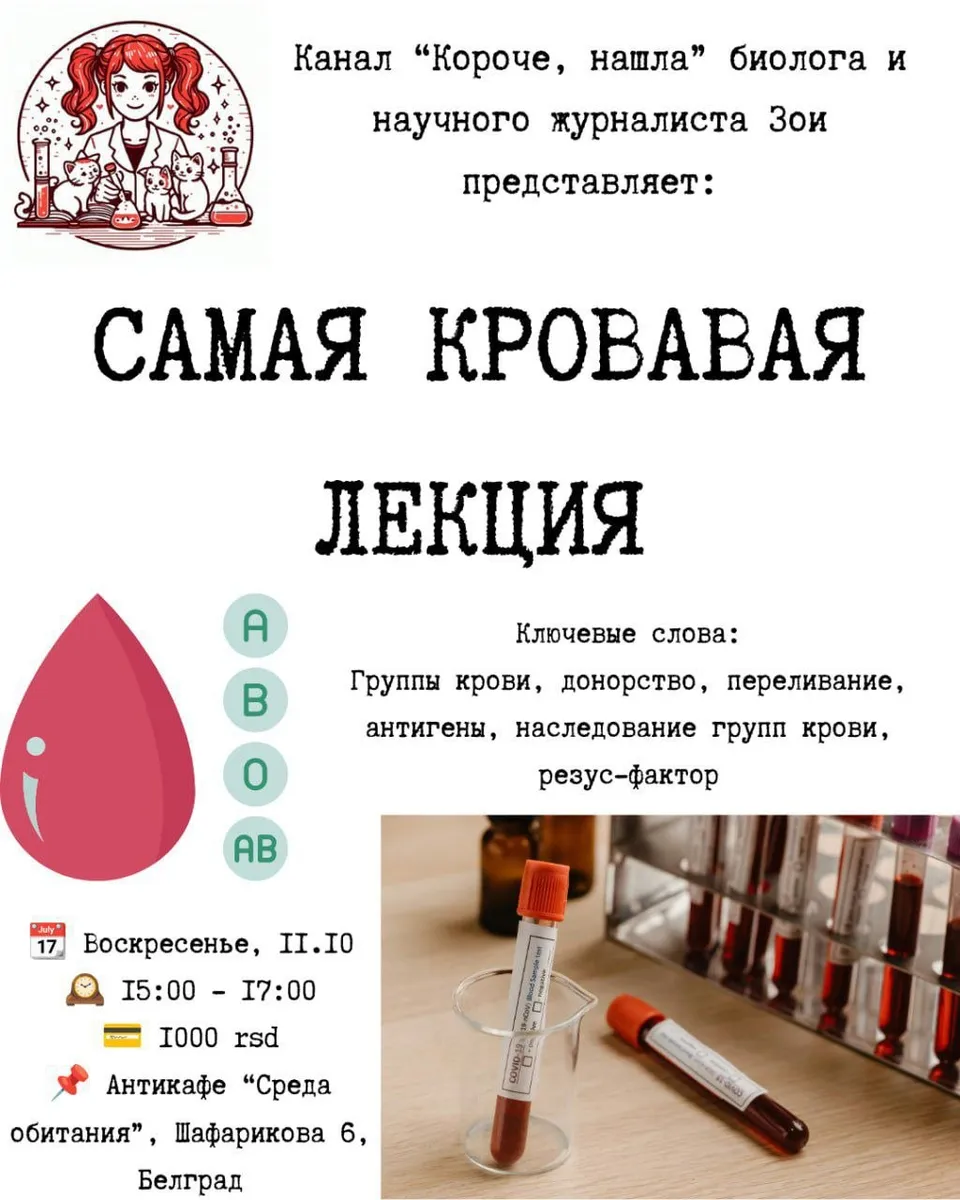
Organizer: Тайм-кафе «Среда Обитания» A lecture explaining why the familiar blood types are only the tip of the iceberg, how blood groups and antigens arose, and why some blood variants are very rare. Presented by Zoya, a science journalist and biologist. Paid entry; registration required. This announcement was found and posted by KiddoDoo editors. Like it and we will find out all the details and exact schedule. ⚡️The Bloodiest Lecture! * October 10 at 15:00 ————————— We are used to thinking that there are only four blood groups: first, second, third and fourth. And then rhesus. It seems the story ends there. In fact, these standard blood types are only the tip of the iceberg. In the lecture you will learn how scientists discovered blood groups and understand what really lies behind the familiar “first positive” or “third negative” and why there are actually many more blood group systems than we think. And you will leave enriched with new information: 🩸Why can one person’s blood be transfused to another, while sometimes even a small mismatch becomes dangerous? 🩸Where did blood groups come from and why does the body need all these antigens? 🩸Why do people sometimes have such rare blood variants that finding a suitable donor becomes a separate task? 🩸Can, ultimately, parents with the first blood group have a child with the fourth? Lecture by: Zoya — science journalist and biologist. ——————— 📆 Sunday, 11.10 🕰 15:00 💳 1000 rsd ☎️ Registration (telegram link) 📌 Takes place here (telegram link) * Sorry, but I couldn’t resist the clickbait title in this case 🤦♀️
Q&A:
Most questions are answered by the organizer, but community members can also answer.
Contacts
Kiddodoo MessagesSchedule & Booking:
We verified the schedule less than 24 hours ago. Book with confidence, guaranteed best price.
Skills & Interests
Although biology is not usually taught as a separate subject in primary school, children are often fascinated by biologists’ stories, learning to observe the microworld through a microscope and to recognize different species of plants and animals, learning secrets about everything. Adding biology elements to walks, activities, and experiments is not only engaging, but also helps spark a lasting interest in the natural sciences.
more «biology» →Evaluating evidence, assumptions, and reliability; not merely applying logical rules.
more «Critical thinking» →Academic Science covers content taught within England's standard general-education curriculum. The tag also applies to home, online, or private tutoring when it follows that curriculum; extracurricular and specialist content outside it is excluded.
more «Academic Science» →Where?

Run activities for kids?
Reach families who are a real match. Post your classes, camps and programs to the open catalog. Kiddodoo shows them to parents whose children are genuinely exploring what you offer, not just anyone within 5 km.
Get startedThis page is from the Kid-do-doo app. Install the app to see the details.
Parenting, made clearer — and less scattered
Understand what may be happening with your child — and find real-world ways to support the next step.
This page is from the Kid-do-doo app. Install the app to see the details.
Parenting, made clearer — and less scattered
Understand what may be happening with your child — and find real-world ways to support the next step.
Schedule:
We verified the schedule less than 24 hours ago. Book with confidence, guaranteed best price.
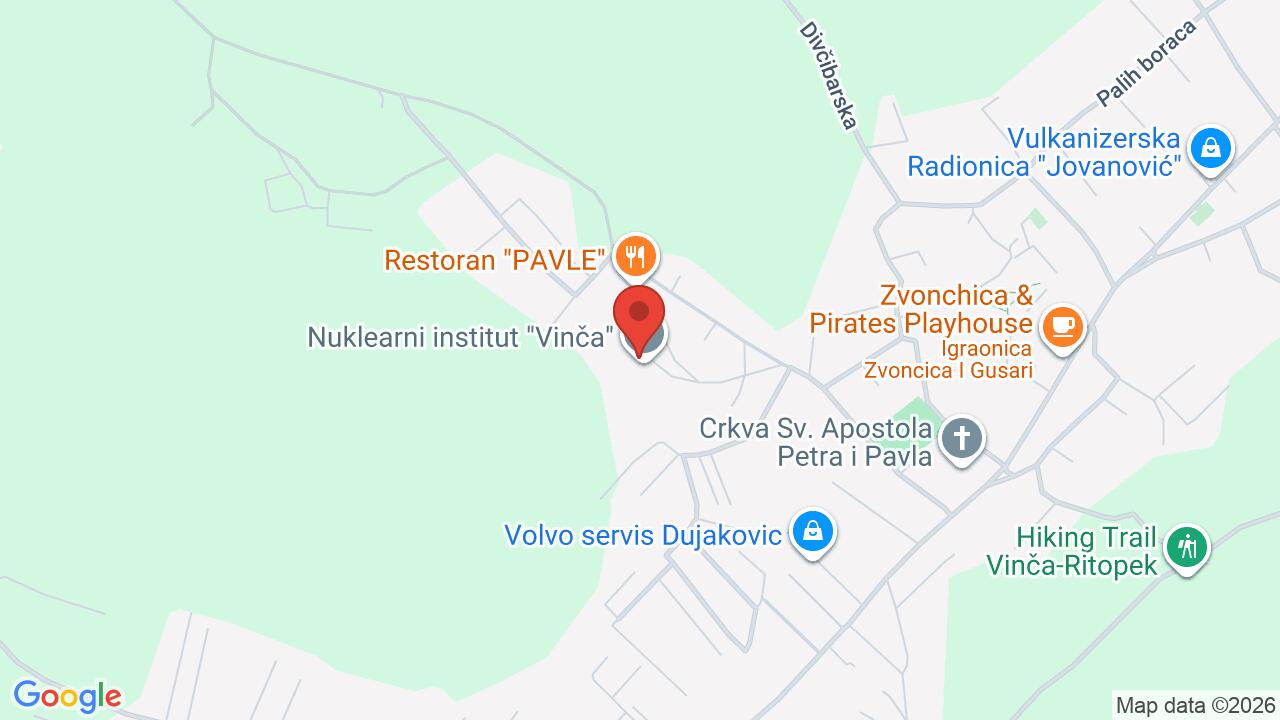
Tours of closed laboratories at the Vinča Institute of Nuclear Sciences (visits) 🔬🏛️
No photos addedTours of closed laboratories at the Vinča Institute of Nuclear Sciences (visits) 🔬🏛️

About
Organizer: Институт ядерних наук "Винча" (Vinča Institute of Nuclear Sciences) As part of the festival on 25 September there will be tours of the closed laboratories of the Vinča Institute of Nuclear Sciences — special visits to scientific laboratories. Free entry within the Researchers' Night program. This announcement was found and posted by KiddoDoo editors. Like it and we will find out all the details and exact schedule. Also, as part of the festival on 25 September there will be tours of the closed laboratories of the Vinča Institute of Nuclear Sciences.
Q&A:
Most questions are answered by the organizer, but community members can also answer.
Contacts
Kiddodoo MessagesSchedule & Booking:
We verified the schedule less than 24 hours ago. Book with confidence, guaranteed best price.
Skills & Interests
Сhildren explore science through hands-on experience: observing, mixing, testing hypotheses, and discovering cause-and-effect relationships. They satisfy children’s natural curiosity, develop logical thinking and fine motor skills, and show that science can be practical, understandable, and engaging.
more «lab experiments» →Academic Science covers content taught within England's standard general-education curriculum. The tag also applies to home, online, or private tutoring when it follows that curriculum; extracurricular and specialist content outside it is excluded.
more «Academic Science» →Where?
Run activities for kids?
Reach families who are a real match. Post your classes, camps and programs to the open catalog. Kiddodoo shows them to parents whose children are genuinely exploring what you offer, not just anyone within 5 km.
Get startedThis page is from the Kid-do-doo app. Install the app to see the details.
Parenting, made clearer — and less scattered
Understand what may be happening with your child — and find real-world ways to support the next step.
This page is from the Kid-do-doo app. Install the app to see the details.
Parenting, made clearer — and less scattered
Understand what may be happening with your child — and find real-world ways to support the next step.
Schedule:
We verified the schedule less than 24 hours ago. Book with confidence, guaranteed best price.