



About
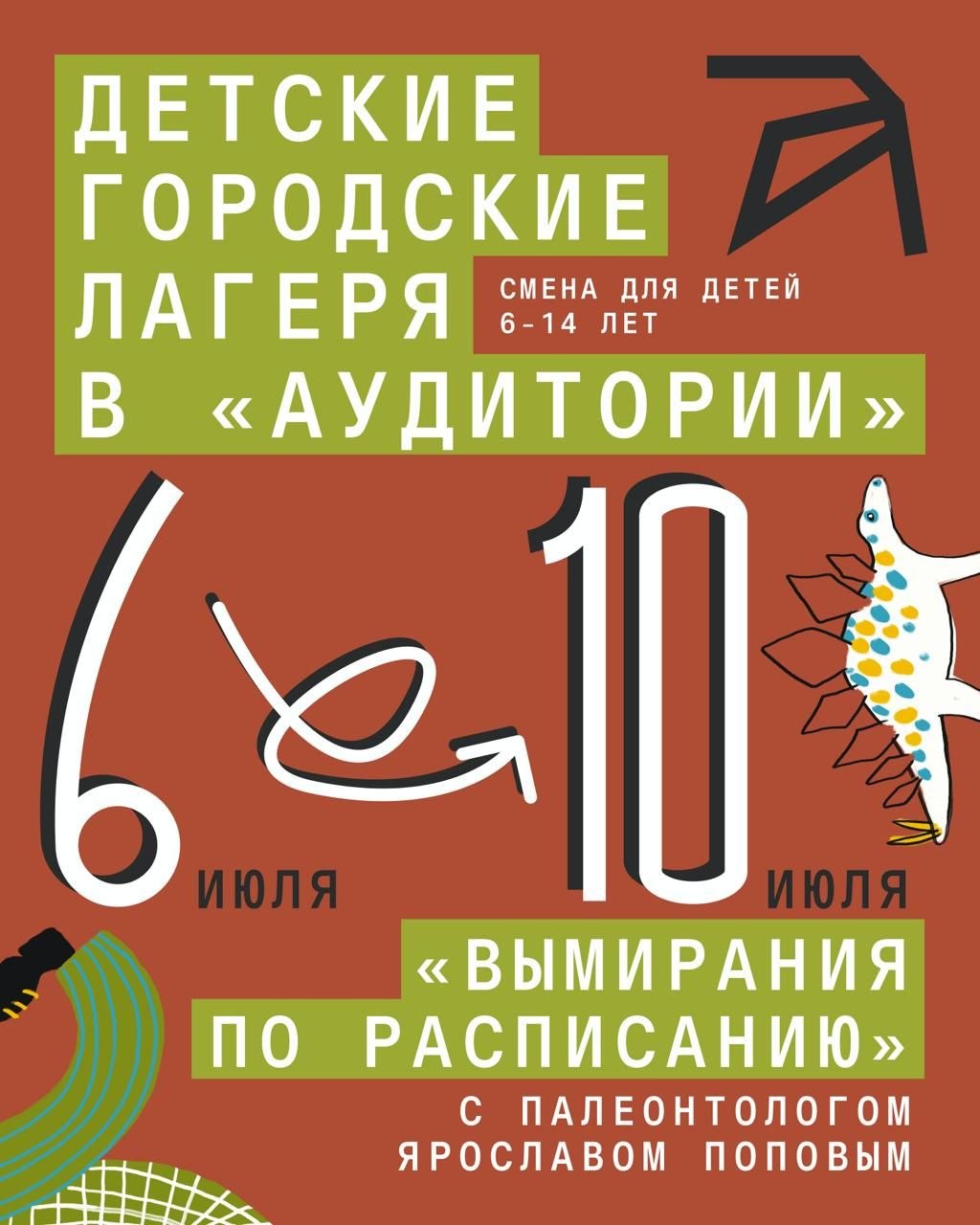
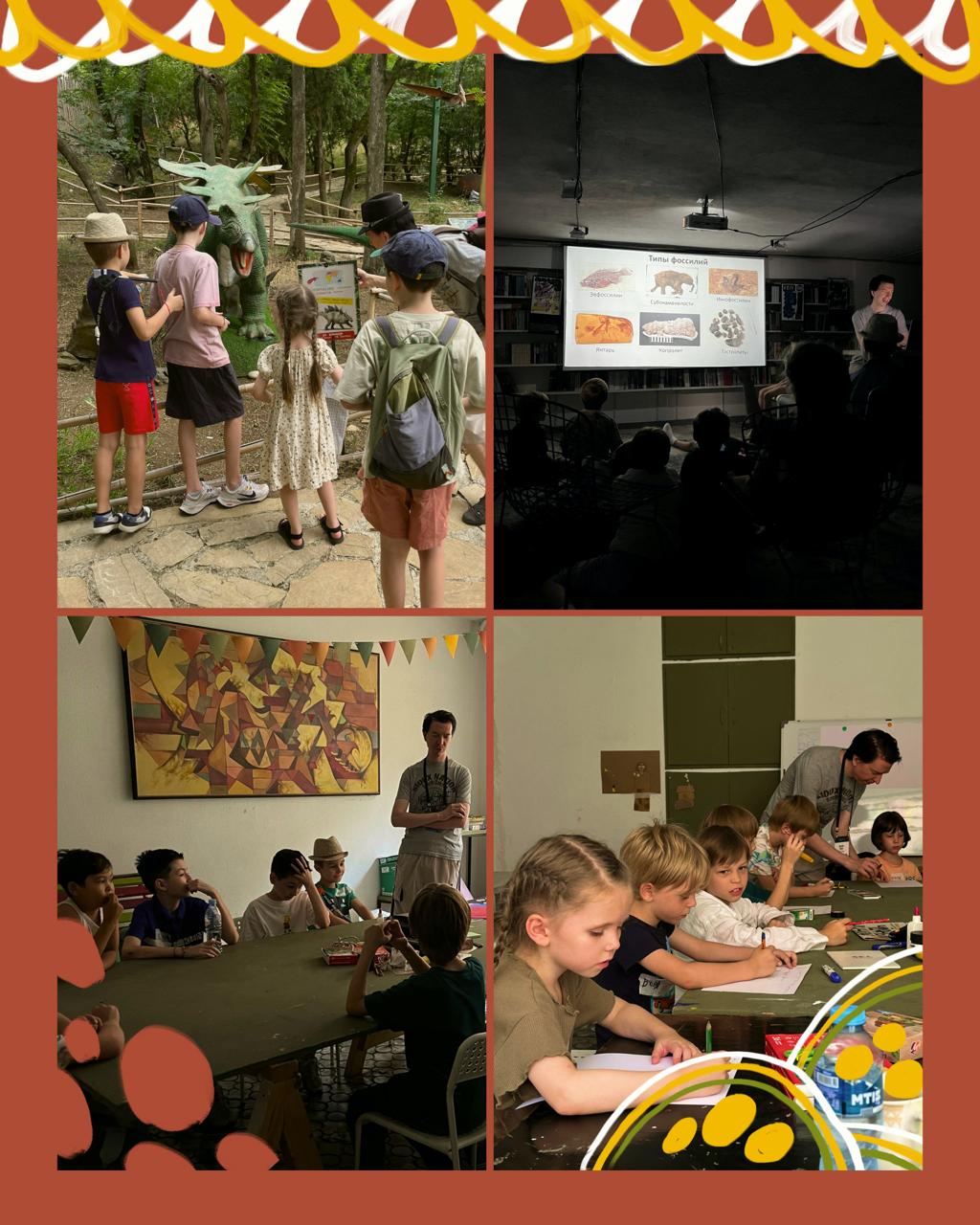
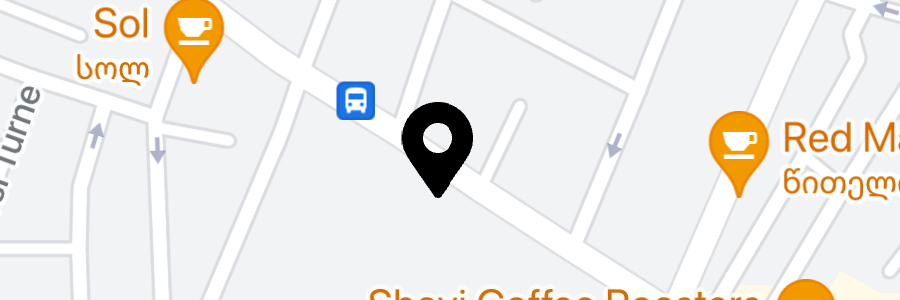
Children's day camp «Extinctions on Schedule» 🦖☄️ June 6, 2026 to July 10, 2026 (Mon–Fri), daily, 10:00–17:00 Why did the dinosaurs disappear? What happened to life on Earth after global catastrophes? Could a new great extinction be happening right now? Over five days participants will explore the largest changes in the history of life on Earth. Together with paleontologist Yaroslav Popov, kids will learn how the five biggest mass extinctions reshaped the planet and why life restarted after each catastrophe. Each day of the camp is devoted to one of the great past catastrophes. Participants will witness Ordovician glaciation, the Permian extinction, the demise of the dinosaurs and other turning points. The program includes scientific investigations, experiments and practical classes to understand the natural mechanisms behind global change. We will acidify “oceans”, model the consequences of volcanic catastrophes and nuclear winter, report from an asteroid impact site, study ancient ecosystems and look for traces of past catastrophes in the nature of the Caucasus. Participants get an immersion in the work of scientists who reconstruct multimillion‑year events from preserved traces. 🗣 Yaroslav Popov — paleontologist, science popularizer, research fellow at the State Darwin Museum, author of popular science lectures and programs for children and adults. 📌 The camp runs Monday to Friday from 10:00 to 17:00. The program includes lessons, experiments, games, walks and team projects. 🥪 Meals and all materials for activities are included. 💳 Participation fee: 500₾ if paid before June 22 550₾ after June 22 📝 Registration: https://t.me/auditoria_tbi 📍Auditoria (S. Janashia 22–26)
Q&A:
Most questions are answered by the organizer, but community members can also answer.
Contacts
Kiddodoo MessagesSchedule & Booking:
We verified the schedule less than 24 hours ago. Book with confidence, guaranteed best price.
Skills & Interests
Сhildren explore science through hands-on experience: observing, mixing, testing hypotheses, and discovering cause-and-effect relationships. They satisfy children’s natural curiosity, develop logical thinking and fine motor skills, and show that science can be practical, understandable, and engaging.
more «lab experiments» →Science, Technology, Engineering, Mechanics — practical exploration of engineering thinking and creative construction. Children experiment, design and build structures, test their ideas, and learn how simple mechanisms and processes work. These activities develop logical thinking, focus and perseverance, as well as spatial imagination.
more «stem» →Where?
Share your activity on Kid-do-doo?
Start fast. Turn a post you already have into a simple listing on Kiddodoo. Make it visible to parents. Improve it later.
Get startedThis is a page from the Kid-do-doo app — a navigator for parents in the world of kids' activities. To see the full information you need to install the app and join.
Schedule:
We verified the schedule less than 24 hours ago. Book with confidence, guaranteed best price.