
About
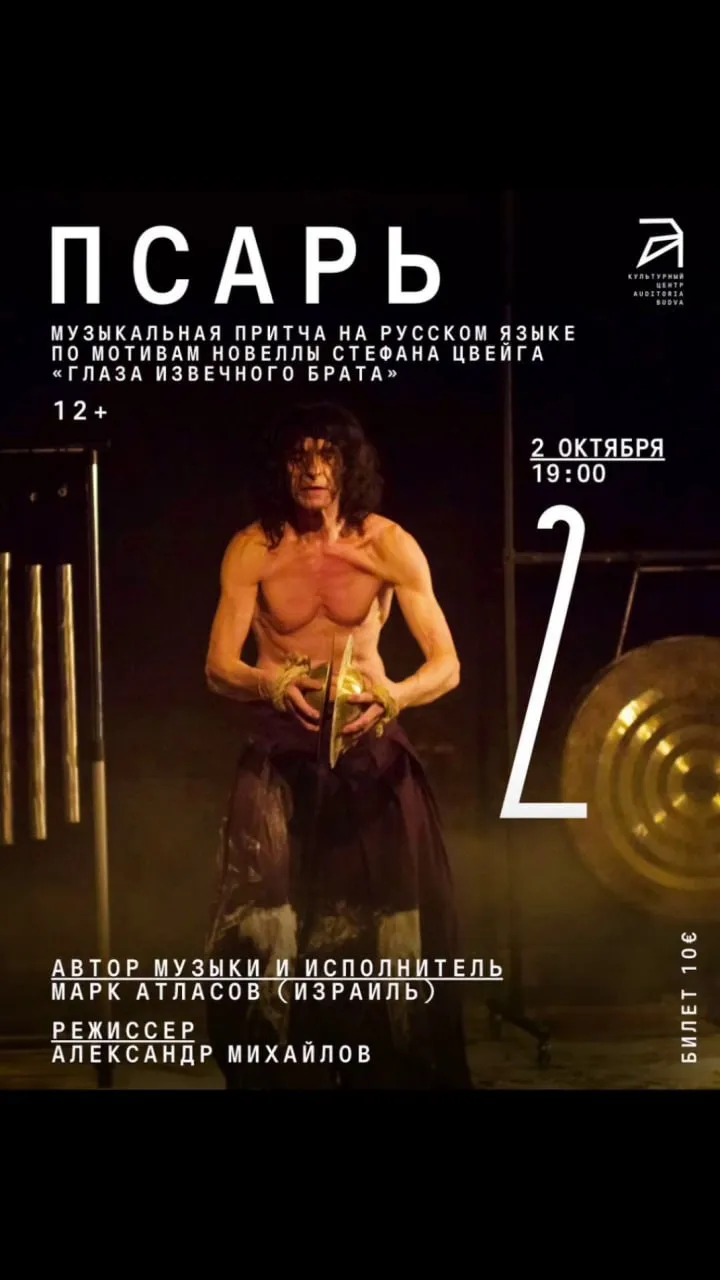
Organizer: Культурный центр Auditoria Join the philosophical-musical play “Psar” based on Stefan Zweig’s novella. One performer plays multiple characters while creating the musical environment using 29 instruments from ancient and exotic to modern. Recommended for guests older than 12; ticket €10. This announcement was found and posted by KiddoDoo editors. Like it and we will find out all the details and exact schedule. You are invited on Friday, October 2 at 19:00 to the philosophical-musical play in Russian “Psar” based on Stefan Zweig’s novella “The Eyes of the Eternal Brother.” In this musical parable brought from Israel, word and melody have become equal protagonists. The production is based on a philosophical and dramatic story about a man seeking truth, redemption, and his own path. Zweig’s novella is known for its depth and intense inner drama, but the stage version of “Psar” goes further: new plot elements have been added to expand the meaning of the story. The form of the play is truly unique. One performer plays several characters at once — and at the same time creates the musical space of the action. The performance features 29 instruments: from ancient and exotic to modern. Mongolian morin khuur, African kalimba, Tibetan singing bowls, hang and rav, a large frame drum, ethnic flutes, metallophones — each instrument becomes the voice of a distinct state, character, fate. Director: Alexander Mikhailov Composer and performer: Mark Atlasov Script: Alex Germash Sound design and percussion: Maxim Kharitonov Artist: Maria Mikhailova Guests older than 12 are welcome Ticket €10 Cash payment at Auditoria Budva Card payment via link (link) Register easily in KiddoDu or via the organizer’s direct message: telegram link
Q&A:
Most questions are answered by the organizer, but community members can also answer.
Contacts
Kiddodoo MessagesSchedule & Booking:
We verified the schedule less than 24 hours ago. Book with confidence, guaranteed best price.
Skills & Interests
Classes where children develop acting skills, stage presence, and musical awareness. They explore themselves through games and exercises focused on improvisation, expression, and self-expression, or by working on performance projects. These classes help children reveal their individuality, learn to work as a team, express emotions, control their voice and body, and build confidence and the ability to perform in front of an audience.
more «acting and stage performance» →Activities for relaxation and good vibes. Things that help restore energy or keep connected — meetups, festivals, family celebrations, theatre performances, walks — for shared family leisure or special events organized for children under supervision.
more «entertainment» →Activities centered around music that develop listening skills, sense of rhythm, attention, memory, coordination, musicality, and self-expression — through listening and playful interaction as well as learning music theory, playing instruments, or singing. Over time, musicality becomes more than a skill: it becomes a way to experience joy, process emotions, feel part of a group, and find support in music throughout life.
more «music» →Everything that broadens children’s horizons and helps them understand the world through images, stories, and experiences. This part of the “basic activity balance” helps develop empathy, nourishes imagination, and supports the ability to see things from different perspectives. And of course, it’s also enjoyable shared time — endless opportunities for discussion and exchanging impressions.
more «cultural enrichment» →One-time events and activities for weekends or leisure: plays and movie screenings, workshops, lectures, day hikes and trips, fairs, shows, fun runs, competitions, quests. What's there for us this weekend?
more «upcoming events» →Where?

Run activities for kids?
Reach families who are a real match. Post your classes, camps and programs to the open catalog. Kiddodoo shows them to parents whose children are genuinely exploring what you offer, not just anyone within 5 km.
Get startedThis page is from the Kid-do-doo app. Install the app to see the details.
Parenting, made clearer — and less scattered
Understand what may be happening with your child — and find real-world ways to support the next step.
This page is from the Kid-do-doo app. Install the app to see the details.
Parenting, made clearer — and less scattered
Understand what may be happening with your child — and find real-world ways to support the next step.
Schedule:
We verified the schedule less than 24 hours ago. Book with confidence, guaranteed best price.