
About
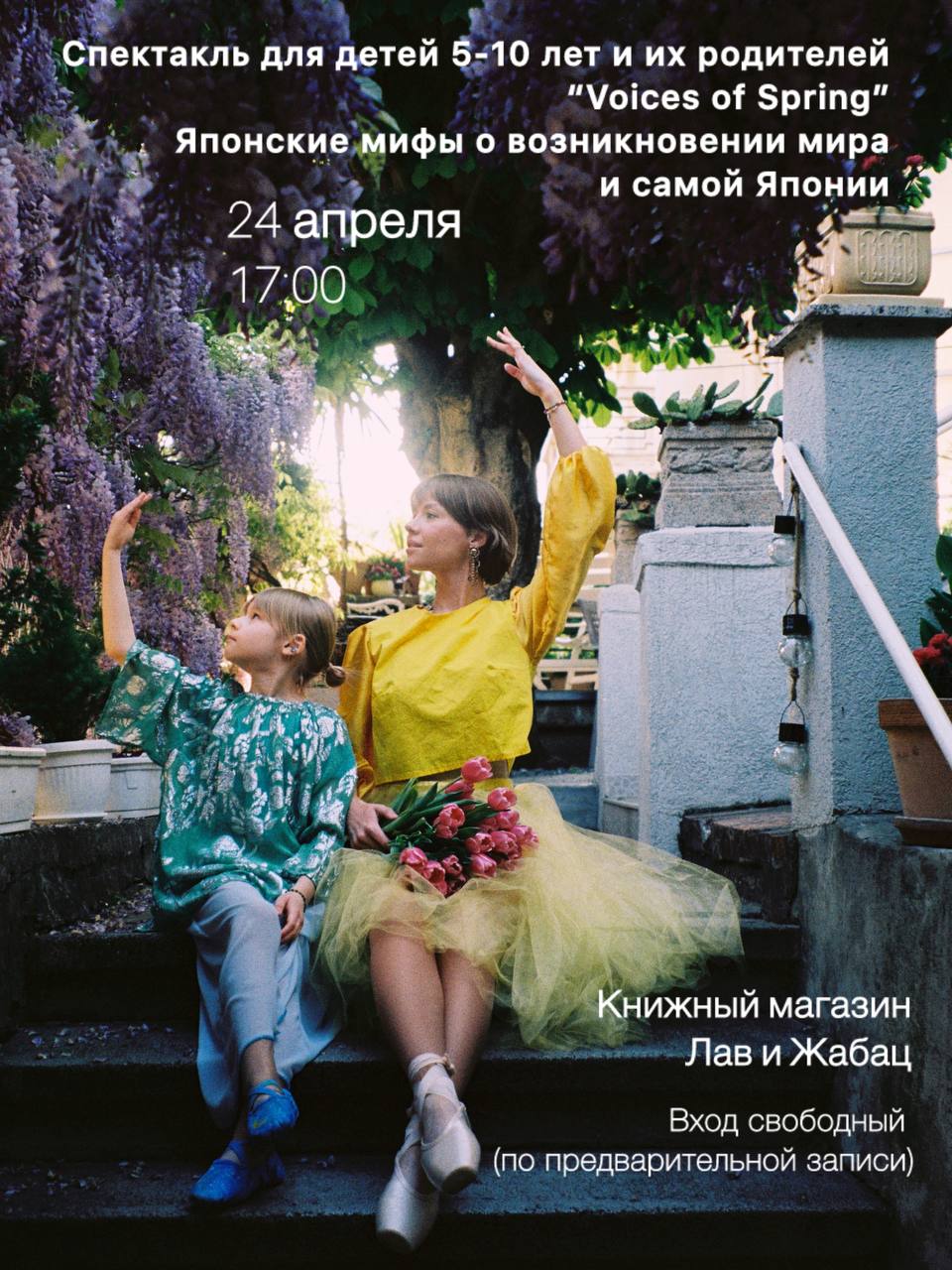
Family play “Voices of Spring” on the theme of Japanese mythology — for children 5–10 years and their parents. A word from the creators: "We are Makar, Mary and Roman — son, mom and dad — we will show you a small play about Japan. Makar will perform a fragment from the animated film 'Howl's Moving Castle' directed by Hayao Miyazaki, as well as melodies he composed himself. We will dance to a composition by J. Strauss, and to Makar's accompaniment I will tell myths about the creation of Japan." When: April 24 at 17:00 Where: Cara Uroša 12 (link) Entrance is free, but it's better to register in advance! To register write in the comments or to email: lav-i-zabac@yandex.com
Q&A:
Most questions are answered by the organizer, but community members can also answer.
Contacts
Kiddodoo MessagesSchedule & Booking:
We verified the schedule less than 24 hours ago. Book with confidence, guaranteed best price.
Skills & Interests
Classes where children develop acting skills, stage presence, and musical awareness. They explore themselves through games and exercises focused on improvisation, expression, and self-expression, or by working on performance projects. These classes help children reveal their individuality, learn to work as a team, express emotions, control their voice and body, and build confidence and the ability to perform in front of an audience.
more «acting and stage performance» →Organized activities in which children and caregivers participate together, such as crafts, games, quests, movement, or family camps. The defining element is shared participation and relationship time, not a particular subject.
more «familytime» →Activities centered around music that develop listening skills, sense of rhythm, attention, memory, coordination, musicality, and self-expression — through listening and playful interaction as well as learning music theory, playing instruments, or singing. Over time, musicality becomes more than a skill: it becomes a way to experience joy, process emotions, feel part of a group, and find support in music throughout life.
more «music» →Activities in which children create, structure, tell, or perform stories through speech, writing, drawing, play, or movement. The focus is narrative creation and communication rather than passive story listening.
more «storytelling» →Theatre gives children material that continues to work long after the performance ends: they return to what they saw in drawings, conversations, and play, try on different characters, replay their actions and emotions, and absorb new role models. This develops imagination, understanding of stories, and understanding of other people. Regular exposure to theatre builds an interest in culture and a habit of enjoying more complex stories. Spending this kind of time together outside everyday routines also strengthens the parent-child bond and helps build a lasting habit of staying connected through shared interests and experiences.
more «stage play» →Where?

Run activities for kids?
Reach families who are a real match. Post your classes, camps and programs to the open catalog. Kiddodoo shows them to parents whose children are genuinely exploring what you offer, not just anyone within 5 km.
Get startedThis page is from the Kid-do-doo app. Install the app to see the details.
Parenting, made clearer — and less scattered
Understand what may be happening with your child — and find real-world ways to support the next step.
This page is from the Kid-do-doo app. Install the app to see the details.
Parenting, made clearer — and less scattered
Understand what may be happening with your child — and find real-world ways to support the next step.
Schedule:
We verified the schedule less than 24 hours ago. Book with confidence, guaranteed best price.