
About
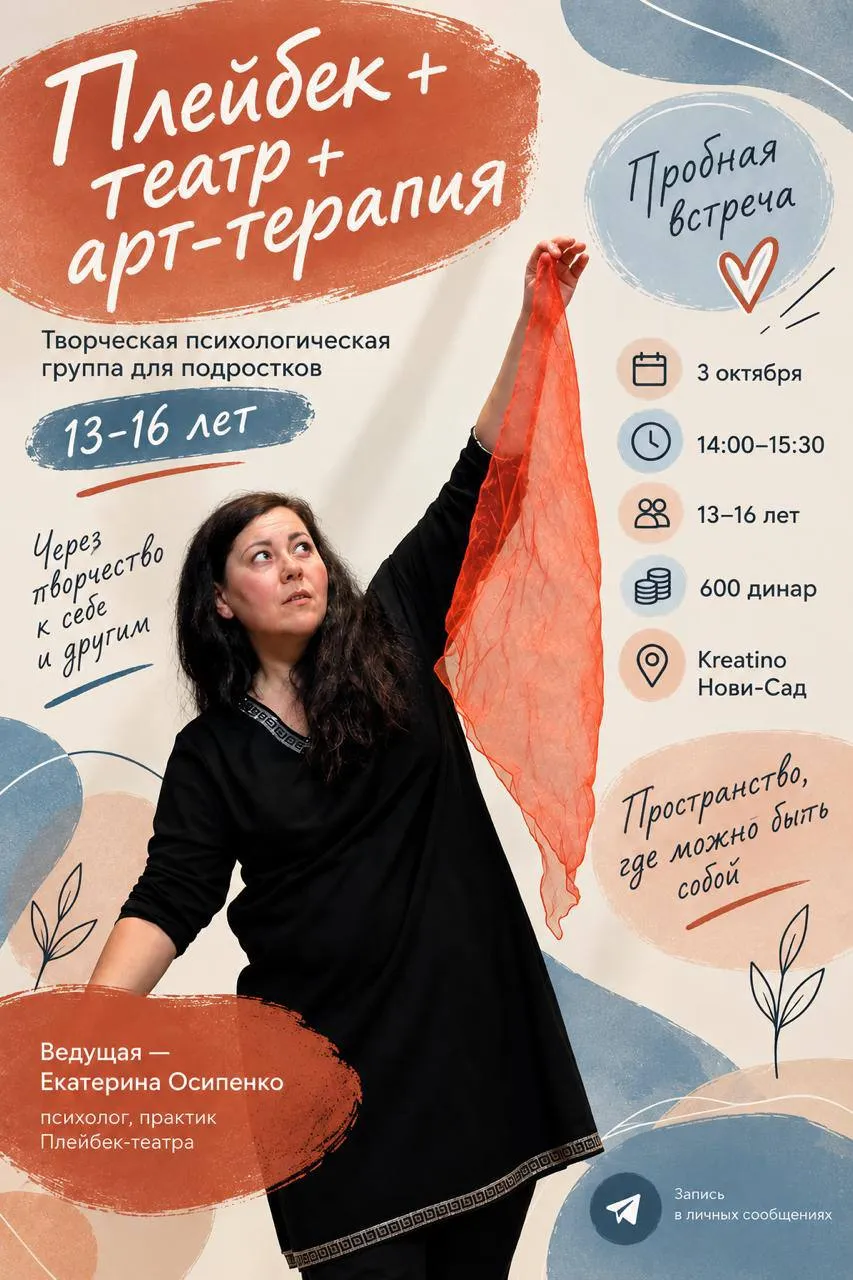
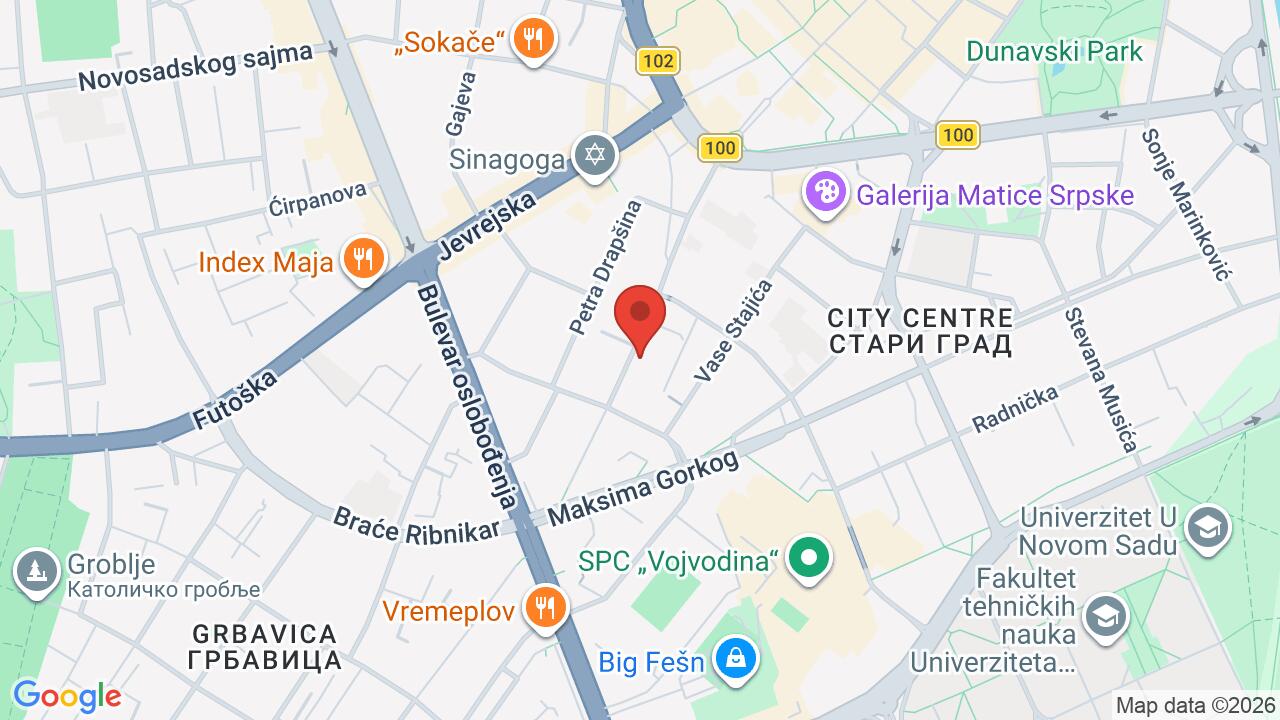
Organisator: Екатерина Осипенко Een proefbijeenkomst van een nieuwe creatieve psychologische groep voor tieners van 13–16 jaar. Sessies gebruiken theater, playback, beweging, tekenen en improvisatie om zelfidentiteit, relaties met leeftijdsgenoten en grenzen te verkennen. De begeleider is psychologe en Playback Theatre-beoefenaar Ekaterina Osipenko. De proefbijeenkomst is op 3 oktober van 14:00–15:30 bij Kreatino. Deze aankondiging is gevonden en geplaatst door de redacteurs van KiddoDoo. Like het en we zoeken alle details en het exacte schema voor je uit. 🎭 Playback + theater + kunsttherapie voor tieners 13–16 jaar We nodigen tieners uit voor een proefbijeenkomst van een nieuwe creatieve psychologische groep. Adolescentie is een periode met veel vragen over jezelf en anderen: Wie ben ik? Wat vind ik leuk en wat wil ik? Hoe zien anderen mij? Waar is mijn plek tussen leeftijdsgenoten? Hoe blijf ik mezelf terwijl ik relaties met anderen heb? In de groep zullen we deze vragen niet alleen door gesprekken onderzoeken, maar ook via theater, playback, beweging, tekenen, beelden, rollen en improvisatie. 🎬 Theater en playback gaan hier niet over acteur worden. Je hoeft niet te kunnen optreden op een podium of mooi te bewegen. Theaterlijk spel en creativiteit worden een manier om jezelf beter te leren kennen, verschillende rollen uit te proberen, gevoelens te uiten en nieuwe ervaringen in de interactie met anderen op te doen. Tijdens de bijeenkomsten kunnen tieners: — zichzelf en hun gevoelens beter leren kennen en begrijpen; — relaties met leeftijdsgenoten onderzoeken; — hun eigen grenzen en die van anderen opmerken; — verschillende manieren van uiten en interactie uitproberen; — hun sterke kanten en innerlijke steun vinden; — ervaring opdoen met steun en het gevoel van erbij horen in een groep; — gezien en gehoord worden terwijl ze zichzelf blijven. Elke bijeenkomst is gewijd aan een van de belangrijke thema’s van het opgroeien: ik en mijn gevoelens, vriendschap en relaties, grenzen, conflicten, gezin, school en verwachtingen, keuzes, zelfstandigheid en het vinden van je plek tussen anderen. 👩🎨 Begeleider — Ekaterina Osipenko, psychologe en Playback Theatre-beoefenaar. In het werk met tieners combineert ze psychologie, beweging, creativiteit, spel en improvisatie. ✨ Proefbijeenkomst — 3 oktober 👥 Leeftijd: 13–16 jaar 📅 Datum: 3 oktober ⏰ Tijd: 14:00–15:30 💰 Kosten proefbijeenkomst: 600 Dinar 📍 Kreatino, 15 Novi Sad (link) 💌 Details en aanmelding telegram link #advertentie
Q&A:
Most questions are answered by the organizer, but community members can also answer.
Contacts
Kiddodoo MessagesSchedule & Booking:
We verified the schedule less than 24 hours ago. Book with confidence, guaranteed best price.
Skills & Interests
Managing emotional responses constructively; not suppressing emotion or controlling every impulse.
more «Emotional regulation» →Capabilities for communication, understanding others, and coordinating within relationships and groups; excludes temperament labels and unpracticed moral claims.
more «Social and communication capacities» →Recognizing one's emotions, strengths, needs, and reactions; not body awareness.
more «Self-awareness» →What it is: Movement is the child's current need for physical action or an outlet for bodily energy. Why it matters: meeting it can support bodily comfort, regulation, attention, and readiness for other kinds of participation. When it rises: the body may have been still for too long or may have energy that needs an active outlet. When it lowers: active play, sport, walking, stretching, or another suitable opportunity may have helped meet the need. Why this is the same: wanting to run, move, stretch, or use the body points to the same need for physical action. Why this is different: Restlessness is an uncomfortable feeling that may accompany the need, while Challenge is a need for achievable difficulty rather than movement itself.
more «Movement» →Current needs for choice, achievable difficulty, and an outlet for self-expression. Includes Choice, Challenge, and Expression. Excludes enduring abilities such as confidence, resilience, independence, creativity, and communication; personality or temperament labels; performance outcomes; and pressure to achieve. Why it matters: meaningful choice, achievable challenge, and opportunities for expression can support engagement and a sense of competence and ownership in the child's experience. Boundary rule: terms are included together when they point to the same thing the child currently seeks or lacks; a nearby concept stays separate when it is a feeling, a developable ability, or a different need. Activity direction: +1 or +2 means this need may become stronger or remain less met; −1 or −2 means the activity may help meet it and therefore reduce it. A magnitude of 2 is a stronger theoretical direction than 1, not a measurement or guarantee for an individual child.
more «Agency and growth» →Preparing a performance: children learn acting, rehearse, and present the show to an audience. These classes develop confidence, diction, memory, and concentration. They also build teamwork skills, encourage emotional expression, and help children feel confident on stage.
more «theatre class» →What it is: Expression is the child's current need for an outlet for feelings, ideas, experiences, imagination, or identity. Why it matters: meeting it can help a child process experience, make themselves understood, exercise agency, and contribute something personally meaningful. When it rises: the child may have something they want to communicate, create, show, or embody without a suitable outlet. When it lowers: verbal, creative, musical, physical, dramatic, or symbolic expression may have helped meet the need. Why this is the same: these different forms belong together because each gives inner experience an outward form. Why this is different: Communication and Creativity are transferable abilities that can develop through expressive activities; they are not the child's current need for an outlet.
more «Expression» →Belief in one's ability to participate, learn, or perform; not a claim of global self-worth.
more «Self-confidence» →Generating and developing original, useful ideas or expressions; includes applied imagination.
more «Creativity» →Where?
Run activities for kids?
Reach families who are a real match. Post your classes, camps and programs to the open catalog. Kiddodoo shows them to parents whose children are genuinely exploring what you offer, not just anyone within 5 km.
Get startedThis page is from the Kid-do-doo app. Install the app to see the details.
Parenting, made clearer — and less scattered
Understand what may be happening with your child — and find real-world ways to support the next step.
This page is from the Kid-do-doo app. Install the app to see the details.
Parenting, made clearer — and less scattered
Understand what may be happening with your child — and find real-world ways to support the next step.
Schedule:
We verified the schedule less than 24 hours ago. Book with confidence, guaranteed best price.