
About
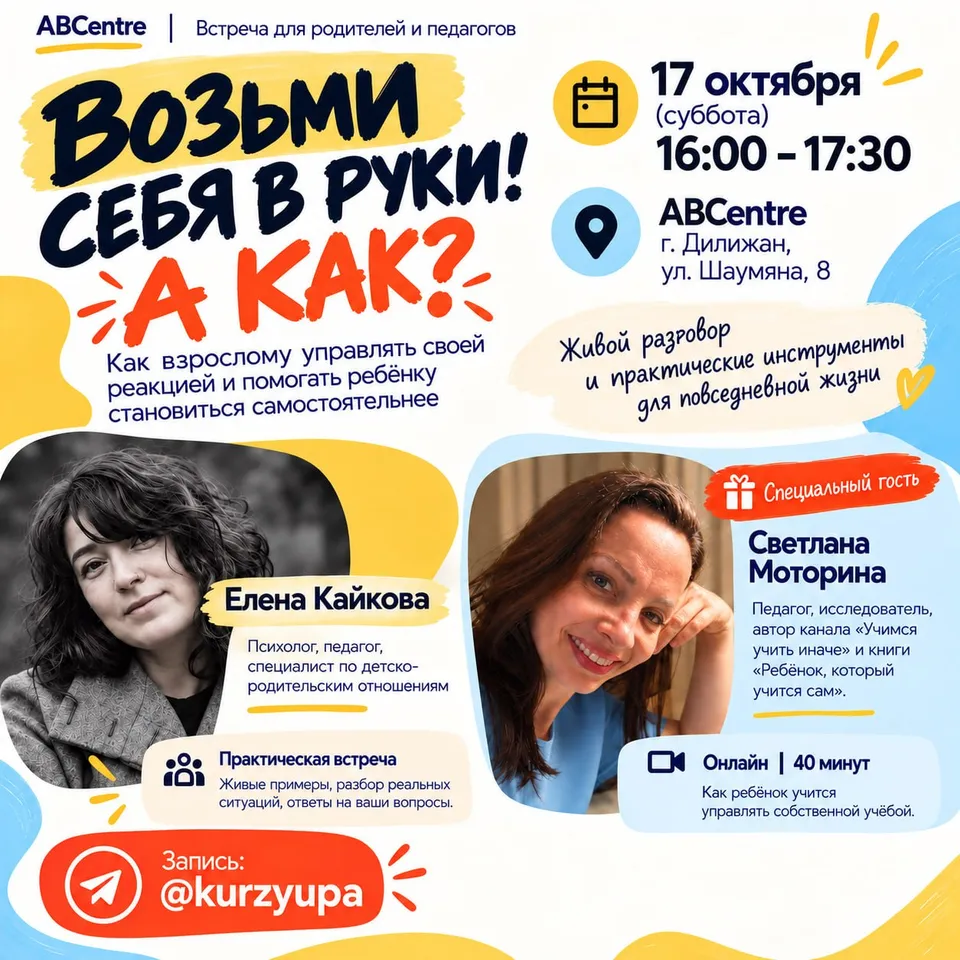
Organizator: ABCentre 17 października w ABCentre odbędzie się praktyczne spotkanie dla rodziców i pedagogów z Eleną Kajkovą i gościnnym udziałem online Swietłany Motoriny. Omówimy, co dzieje się, gdy emocje biorą górę, dlaczego polecenia „uspokój się” nie działają i jakie praktyczne narzędzia pomagają zauważać reakcje i nimi zarządzać. Specjalny blok (40 minut) z gościem poświęcony będzie temu, jak dzieci uczą się wyznaczać cele, planować i brać odpowiedzialność za naukę. To ogłoszenie zostało znalezione i opublikowane przez redaktorów KiddoDoo. Polub je, a poznamy wszystkie szczegóły i dokładny harmonogram. 🤯 «WEŹ SIĘ W GARŚĆ!» — JAK? „Uspokój się!” „Ogarnij się!” „Skoncentruj się!” „Zacznij już odrabiać lekcje!” Jak często mówimy to dzieciom! A potem łapiemy się na tym, że i my sami nie zawsze potrafimy opanować emocje, skoncentrować się lub zmusić się do wykonania nieprzyjemnego zadania 😔. Czy można się nauczyć panować nad sobą? I jak pomóc dziecku tego się nauczyć? 📅 Aby odpowiedzieć na to pytanie, 17 października zapraszamy rodziców i pedagogów na spotkanie praktyczne w ABCentre. Razem z Eleną Kajkovą będziemy wyjaśniać, co się z nami dzieje, gdy emocje biorą górę, dlaczego zwykłe wezwania „uspokój się” nie działają i co można zrobić zamiast tego. Nie będziemy tylko rozmawiać — spróbujemy praktycznych narzędzi, które pomagają zauważać swoje reakcje i nimi zarządzać. 🎁 A dodatkowo będziemy mieli specjalnego gościa — Swietłanę Motorinę! Swietłana jest nauczycielką, badaczką, autorką kanału Telegram „Учимся учить иначе” (telegram link) i książki „The Child Who Learns by Himself”. Dołączy do nas online na 40 minut, aby porozmawiać o tym, jak dzieci uczą się kierować własną nauką. Jak dziecko uczy się stawiać cele, planować, radzić sobie z trudnościami i sprawdzać się? Dlaczego niektóre dzieci samodzielnie przystępują do zadania, a inne ciągle potrzebują przypomnień i kontroli? I co mogą robić dorośli, aby stopniowo przekazywać dziecku odpowiedzialność za naukę? W końcu samodzielność nie pojawia się na rozkaz „Zrób to sam!”. Trzeba się jej również nauczyć ❤️. 📅 17 października, sobota 🕓 16:00–17:30 📍 ABCentre, Дилижан, ул. Шаумяна, 8 🥰 Wstęp wolny 📩 Zapisy: telegram link Przyjdź, jeśli chcesz nie tylko wymagać od dziecka samokontroli i samodzielności, ale rozumieć, jak pomóc mu się tego nauczyć ❤️.
Q&A:
Most questions are answered by the organizer, but community members can also answer.
Contacts
Kiddodoo MessagesSchedule & Booking:
We verified the schedule less than 24 hours ago. Book with confidence, guaranteed best price.
Skills & Interests
Managing emotional responses constructively; not suppressing emotion or controlling every impulse.
more «Emotional regulation» →Recognizing one's emotions, strengths, needs, and reactions; not body awareness.
more «Self-awareness» →Pausing and choosing behavior instead of acting on an immediate urge; includes waiting when relevant.
more «Impulse control» →Belief in one's ability to participate, learn, or perform; not a claim of global self-worth.
more «Self-confidence» →Current needs for choice, achievable difficulty, and an outlet for self-expression. Includes Choice, Challenge, and Expression. Excludes enduring abilities such as confidence, resilience, independence, creativity, and communication; personality or temperament labels; performance outcomes; and pressure to achieve. Why it matters: meaningful choice, achievable challenge, and opportunities for expression can support engagement and a sense of competence and ownership in the child's experience. Boundary rule: terms are included together when they point to the same thing the child currently seeks or lacks; a nearby concept stays separate when it is a feeling, a developable ability, or a different need. Activity direction: +1 or +2 means this need may become stronger or remain less met; −1 or −2 means the activity may help meet it and therefore reduce it. A magnitude of 2 is a stronger theoretical direction than 1, not a measurement or guarantee for an individual child.
more «Agency and growth» →Capabilities for understanding and directing one's emotions, behavior, effort, and goals; excludes task reasoning and skills centered on relationships with others.
more «Self-awareness and self-management» →Sequencing steps, resources, and time toward a goal; not choosing the goal itself.
more «Planning and organization» →What it is: Anger is an activated feeling in response to a perceived wrong, threat, or crossed boundary. Why it matters: it can tell a child and nearby adults that protection, fairness, or a boundary needs attention; the feeling can be acknowledged while behaviour remains safe. When it rises: intensity and the urge to protest or confront may grow. When it lowers: the boundary may feel heard, protected, or repaired; lowering does not mean forced compliance. Why this is the same: irritation belongs here when a perceived wrong or crossed boundary is central. Why this is different: Frustration is driven mainly by an obstacle, while aggression is behaviour rather than a feeling.
more «Anger» →Following through on commitments and caring for one's role, materials, or consequences; not obedience alone.
more «Responsibility» →Initiating and completing age-appropriate actions with decreasing assistance.
more «Independence» →Current needs related to bodily energy, recovery, stimulation, predictability, and personal space. Includes Movement, Rest, Stimulation, Structure, and Personal space. Excludes medical needs, current feelings, fixed preferences or temperament labels, and developable abilities such as Emotional regulation. Safety is excluded because it is a required baseline and depends on the provider and environment rather than only the activity TagType. Why it matters: bodily and sensory regulation affects comfort, attention, and the capacity to participate; identifying the current need can help adults choose a better pace, activity, or environment. Boundary rule: terms are included together when they point to the same thing the child currently seeks or lacks; a nearby concept stays separate when it is a feeling, a developable ability, or a different need. Activity direction: +1 or +2 means this need may become stronger or remain less met; −1 or −2 means the activity may help meet it and therefore reduce it. A magnitude of 2 is a stronger theoretical direction than 1, not a measurement or guarantee for an individual child.
more «Regulation needs» →What it is: Calm is a settled present feeling with relatively little tension. Why it matters: it can give a child room to recover, notice what is happening, and participate without feeling rushed. When it rises: the child may feel more at ease and less activated. When it lowers: tension or activation may be becoming more present; this is not automatically a problem. Why this is the same: peaceful, at ease, and relaxed describe Calm when they refer to the same settled emotional state. Why this is different: Rest is something the child may need, Low energy is depletion, and inactivity is only a behaviour; none necessarily means the child feels calm.
more «Calm» →Choosing meaningful, realistic goals and success criteria; not planning the steps or persisting afterward.
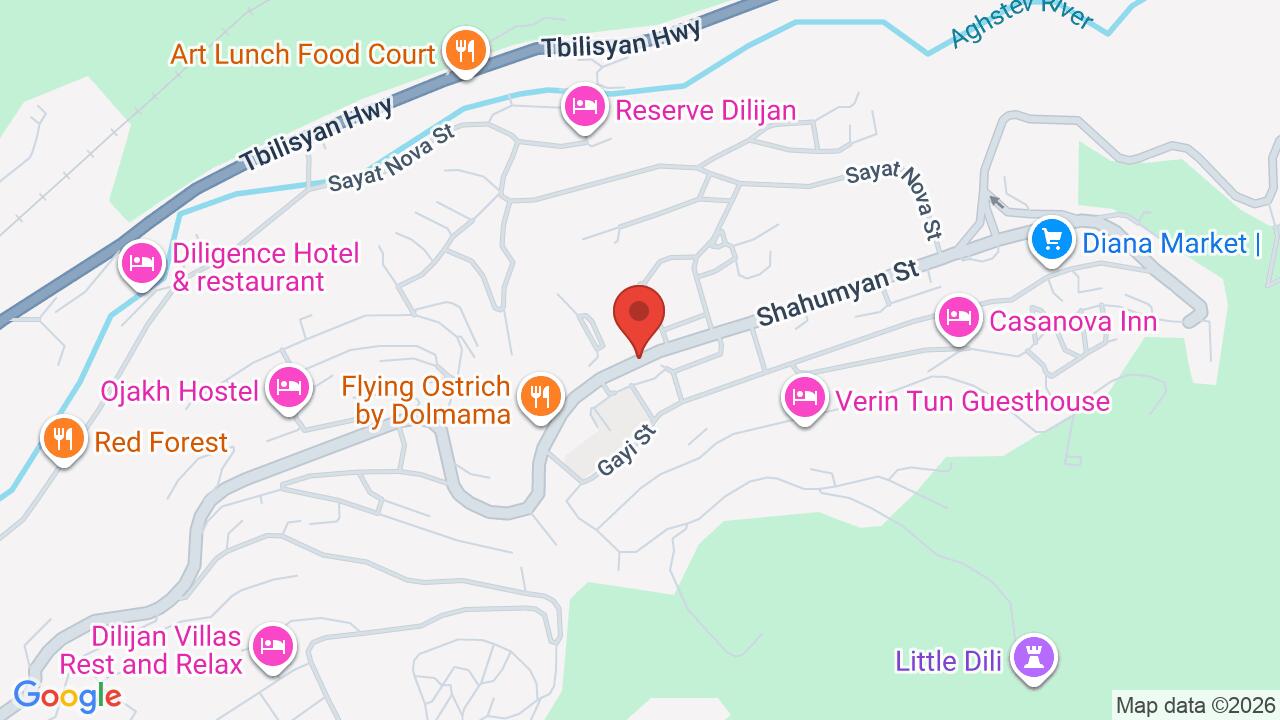
more «Goal setting» →Where?
Run activities for kids?
Reach families who are a real match. Post your classes, camps and programs to the open catalog. Kiddodoo shows them to parents whose children are genuinely exploring what you offer, not just anyone within 5 km.
Get startedThis page is from the Kid-do-doo app. Install the app to see the details.
Parenting, made clearer — and less scattered
Understand what may be happening with your child — and find real-world ways to support the next step.
This page is from the Kid-do-doo app. Install the app to see the details.
Parenting, made clearer — and less scattered
Understand what may be happening with your child — and find real-world ways to support the next step.
Schedule:
We verified the schedule less than 24 hours ago. Book with confidence, guaranteed best price.