early learning approaches — Montenegro


About
Набор в постоянную мини‑группу Научного клуба для детей 3–5 лет в Подгорице и в Баре. Занятия на основе Montessori и игровой математике, программа по естествознанию адаптирована по Pearson Primary Science Year 1. Занятие 1,5 часа с чередованием активностей; после каждого занятия выдаются материалы и листы для самостоятельной работы дома. Этот анонс нашли и разместили редакторы КиддоДу. Ставьте лайк и мы разузнаем все подробности и точное расписание. 💭Открыт набор в Научный клуб для детей 3-5 лет в Подгорице и Баре! Постоянная мини-группа из 6 детей, в которой мы заложим основу математики через игры, материалы Монтессори и творческие задания. Программа по естествознанию - адаптированная Pearson Primary Science Year 1, с фокусом на базовые научные концепции, исследование и любознательность. Занятие проходит в спокойном темпе 1,5 часа, с регулярной сменой активности. Большая часть упражнений - игровые. После каждого занятия дети получают материалы и листы с заданиями для самостоятельной работы дома. 🧮 Математика по трехэтапному методу обучения (CPA — Concrete, Pictorial, Abstract). Сначала - глубинное понимание сути математических операций через манипуляции с предметами, затем - работа с визуальными моделями и, как итог, переход на абстрактный математический язык. + ♟️Шахматы. Основные правила и термины, решение шахматных задач. + 🔬Научный проект - разбираем естественно-научную тему через эксперимент или поделку. Стоимость: €5 пробное занятие €30/ абонемент 4 занятия, Разово: €10 (если есть свободные места, необходимо записываться отдельно на каждое занятие) 📍 Мастерская O2 (Подгорица) 🗓 Каждое воскресенье 11:00-12:30 🏷 €5 пробное, далее €30 / абонемент 4 занятия 📝 Включены доп. материалы для самостоятельных занятий дома 📲 По предварительной записи сообщением telegram link
Q&A:
Most questions are answered by the organizer, but community members can also answer.
Contacts
Kiddodoo MessagesSchedule & Booking:
We verified the schedule less than 24 hours ago. Book with confidence, guaranteed best price.
Skills & Interests
Сhildren explore science through hands-on experience: observing, mixing, testing hypotheses, and discovering cause-and-effect relationships. They satisfy children’s natural curiosity, develop logical thinking and fine motor skills, and show that science can be practical, understandable, and engaging.
more «lab experiments» →From classes focused on advanced olympiad-style math and mental calculation techniques to playful sessions that help younger children grasp basic principles through games and hands-on activities.
more «math» →Science, Technology, Engineering, Mechanics — practical exploration of engineering thinking and creative construction. Children experiment, design and build structures, test their ideas, and learn how simple mechanisms and processes work. These activities develop logical thinking, focus and perseverance, as well as spatial imagination.
more «stem» →Early-childhood programs organized around a named educational approach, currently Montessori, Reggio Emilia, or Waldorf. Their shared boundary is active learning through play, environment, materials, projects, or daily rhythms; the child tags identify the specific approach.
more «early learning approaches» →Early-learning sessions explicitly following Montessori practice, with a prepared environment, hands-on materials, self-chosen work, and support for independence and concentration. Use this tag only when the organizer identifies the approach as Montessori.
more «montessori» →Where?

Run activities for kids?
Reach families who are a real match. Post your classes, camps and programs to the open catalog. Kiddodoo shows them to parents whose children are genuinely exploring what you offer, not just anyone within 5 km.
Get startedThis page is from the Kid-do-doo app. Install the app to see the details.
Parenting, made clearer — and less scattered
Understand what may be happening with your child — and find real-world ways to support the next step.
This page is from the Kid-do-doo app. Install the app to see the details.
Parenting, made clearer — and less scattered
Understand what may be happening with your child — and find real-world ways to support the next step.
Schedule:
We verified the schedule less than 24 hours ago. Book with confidence, guaranteed best price.
About
Organizer: Creative kids Bar Conversational English for children aged 4–6 through play, live interaction and emotional contact with a native American speaker and an experienced Russian-speaking teacher. Small groups, game-based method and maximum speaking practice. Classes on Mon/Wed/Fri 17:00–18:00 (choose two days). This announcement was found and posted by KiddoDoo editors. Like it and we will find out all the details and exact schedule. English that the child doesn't study — but starts to speak. At age 4–6 language is best absorbed through live communication, play and emotional contact. This is conversational English with a native speaker from the USA 🇺🇸 and an experienced Russian-speaking teacher, where the child hears real speech, answers, asks questions, plays and gradually begins to speak independently. ✨ Small groups 🎈 Play-based method 💬 Maximum speaking practice 🇺🇸 Native speaker from America 🧠 Gentle approach to early speech development First English should be alive. Mon/Wed/Fri 17:00-18:00 (choose two days) 📍 Bar, center 📩 Sign up via WhatsApp +38268153997, Telegram anasta7808
Q&A:
Most questions are answered by the organizer, but community members can also answer.
Contacts
Kiddodoo MessagesSchedule & Booking:
We verified the schedule less than 24 hours ago. Book with confidence, guaranteed best price.
Skills & Interests
We're still working on this description. A detailed overview will be available soon.
more «learning english» →Early-childhood programs organized around a named educational approach, currently Montessori, Reggio Emilia, or Waldorf. Their shared boundary is active learning through play, environment, materials, projects, or daily rhythms; the child tags identify the specific approach.
more «early learning approaches» →Children participate in play, creativity, or exploration while language is introduced naturally through communication, instructions, phrases, and new words in context. The focus is on engagement and real interaction — whether it’s a walk, crafts, science experiments, a book club, board games, or sports.
more «activities in english» →Where?

Run activities for kids?
Reach families who are a real match. Post your classes, camps and programs to the open catalog. Kiddodoo shows them to parents whose children are genuinely exploring what you offer, not just anyone within 5 km.
Get startedThis page is from the Kid-do-doo app. Install the app to see the details.
Parenting, made clearer — and less scattered
Understand what may be happening with your child — and find real-world ways to support the next step.
This page is from the Kid-do-doo app. Install the app to see the details.
Parenting, made clearer — and less scattered
Understand what may be happening with your child — and find real-world ways to support the next step.
Schedule:
We verified the schedule less than 24 hours ago. Book with confidence, guaranteed best price.
About
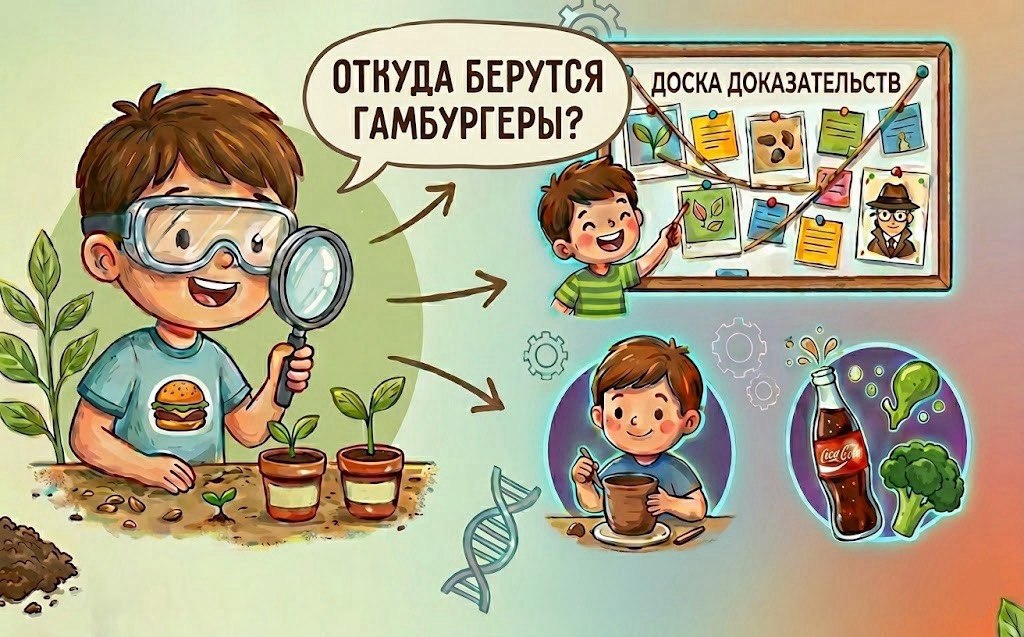
🖇Enrollment is open for a phenomenon-oriented learning club for preschoolers We take everyday “phenomena” and turn them into big discoveries. A child will stop just asking “why?” and will learn to investigate the world like a real scientist—through observation, experiments and creativity. Dear parents! Imagine: you and your child go to McDonald’s, and your child suddenly asks: Mom, where do hamburgers come from? Over 8 weeks the kids will learn how the world works. For our big investigation we will take 3 items: a hamburger, a soda and a plastic soda cup. Did you know that a McCombo is a real chest of secrets? We will dive into its depths: "grow" hamburgers from seeds and become real agronomists, learn where cups come from and finally learn why soda is tasty but harmful to health. What we will do: 🖇Create a big evidence board to investigate our phenomena like real detectives 🖇Learn to grow vegetables from seeds 🖇Make clay pots with our own hands 🖇Learn how cups are made and understand why it is important to protect the environment. We will also learn to recycle materials 🖇Find out why soda fizzes, why it tastes good and at the same time is harmful to health 🖇Learn to observe the world, find answers to interesting questions and, of course, create Result Your little why-asker will turn into a young scientist who can explain how the world works! 2 classes per week of 70 minutes each. Wednesday - 16:00 Saturday - 12:00 Age: 5–6 years Start: April 21 (Wednesday) Place: Adriatic Open, Bar Price: 100 euro / month Registration: telegram link telegram link Sign up fuss-free in KiddoDu or direct to the organizer: telegram link
Q&A:
Most questions are answered by the organizer, but community members can also answer.
Contacts
Kiddodoo MessagesSchedule & Booking:
We verified the schedule less than 24 hours ago. Book with confidence, guaranteed best price.
Skills & Interests
Сhildren explore science through hands-on experience: observing, mixing, testing hypotheses, and discovering cause-and-effect relationships. They satisfy children’s natural curiosity, develop logical thinking and fine motor skills, and show that science can be practical, understandable, and engaging.
more «lab experiments» →Science, Technology, Engineering, Mechanics — practical exploration of engineering thinking and creative construction. Children experiment, design and build structures, test their ideas, and learn how simple mechanisms and processes work. These activities develop logical thinking, focus and perseverance, as well as spatial imagination.
more «stem» →Activities that help participants become aware of their connection with nature, develop a mindful and respectful attitude toward it, take part in environmental initiatives, and gain a deeper understanding of natural ecosystems and how modern technologies can contribute to their preservation.
more «ecology» →Early-childhood programs organized around a named educational approach, currently Montessori, Reggio Emilia, or Waldorf. Their shared boundary is active learning through play, environment, materials, projects, or daily rhythms; the child tags identify the specific approach.
more «early learning approaches» →Where?

Run activities for kids?
Reach families who are a real match. Post your classes, camps and programs to the open catalog. Kiddodoo shows them to parents whose children are genuinely exploring what you offer, not just anyone within 5 km.
Get startedThis page is from the Kid-do-doo app. Install the app to see the details.
Parenting, made clearer — and less scattered
Understand what may be happening with your child — and find real-world ways to support the next step.
This page is from the Kid-do-doo app. Install the app to see the details.
Parenting, made clearer — and less scattered
Understand what may be happening with your child — and find real-world ways to support the next step.
Schedule:
We verified the schedule less than 24 hours ago. Book with confidence, guaranteed best price.