Agency and growth — Serbia

About
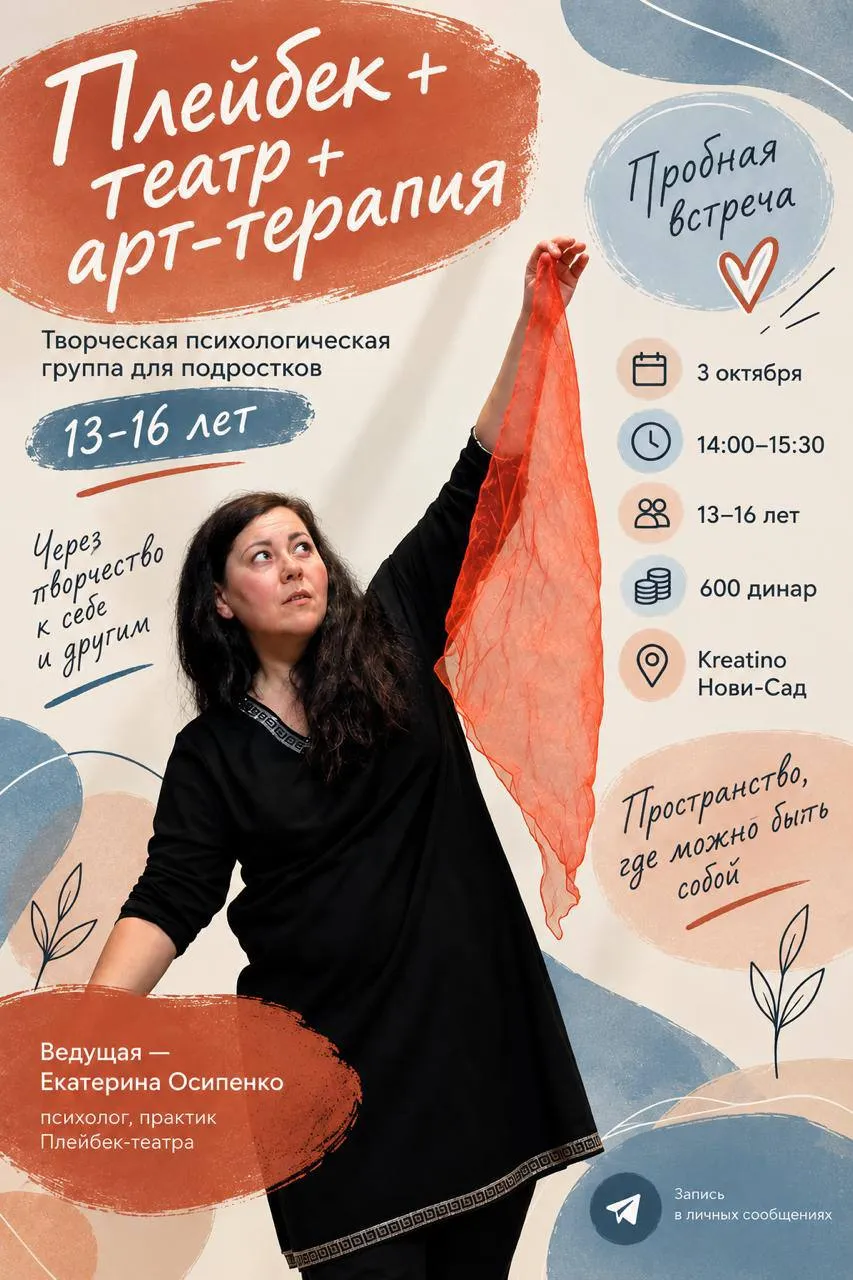
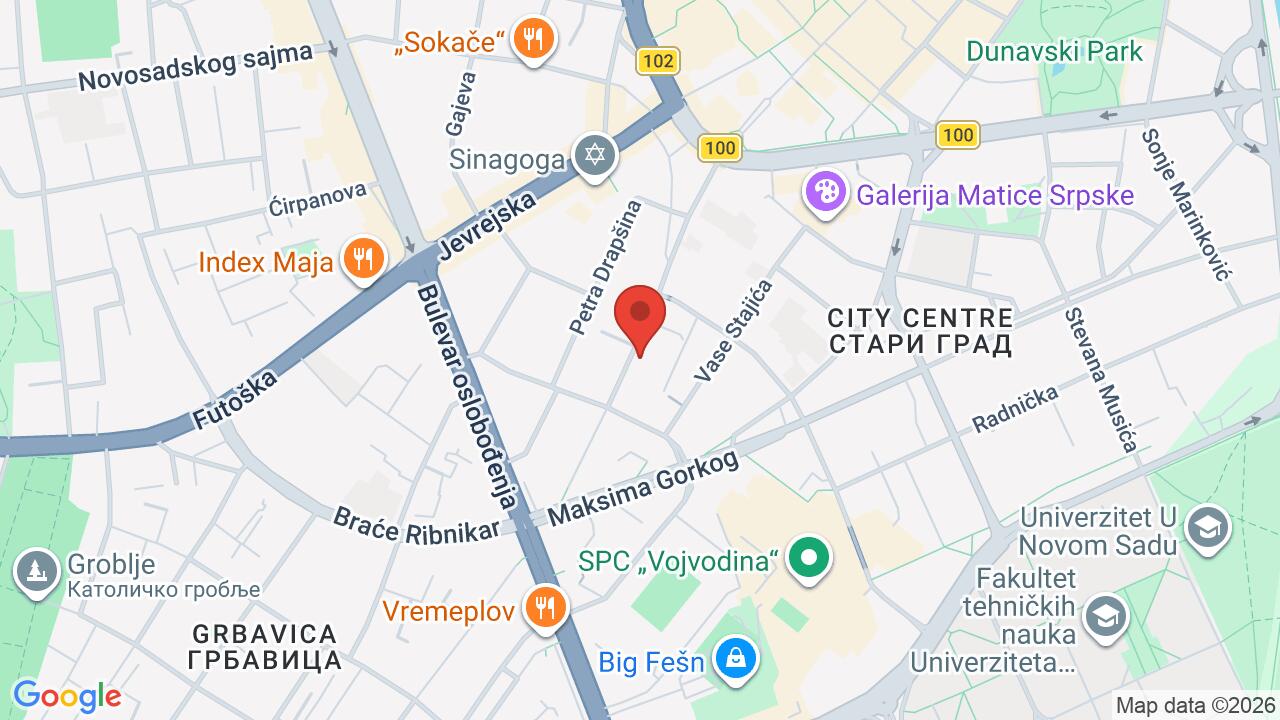
Organizer: Екатерина Осипенко A trial meeting of a new creative psychological group for teenagers aged 13–16. Sessions use theatre, playback, movement, drawing and improvisation to explore self-identity, peer relationships and boundaries. The facilitator is psychologist and Playback Theatre practitioner Ekaterina Osipenko. The trial meeting is on October 3, 14:00–15:30 at Kreatino. This announcement was found and posted by KiddoDoo editors. Like it and we will find out all the details and exact schedule. 🎭 Playback + theatre + art therapy for teenagers 13–16 We invite teenagers to a trial meeting of a new creative psychological group. Adolescence is a time with many questions about oneself and others: Who am I? What do I like and want? How do others see me? Where is my place among peers? How to stay yourself while being in relationships with others? In the group we will explore these questions not only through conversation but also through theatre, Playback, movement, drawing, images, roles and improvisation. 🎬 Theatre and Playback here are not about becoming an actor. You don’t need to know how to perform on stage or move nicely. Theatrical play and creativity become a way to get to know yourself better, try different roles, express feelings and gain new experience of interacting with others. At the meetings teenagers will be able to: — get to know and understand themselves and their feelings better; — explore relationships with peers; — notice their own boundaries and the boundaries of others; — try different ways of expressing themselves and interacting; — find their strengths and inner supports; — gain experience of support and belonging to a group; — be seen and heard while remaining themselves. Each meeting is dedicated to one of the important topics of growing up: me and my feelings, friendship and relationships, boundaries, conflicts, family, studies and expectations, choice, independence and finding one’s place among others. 👩🎨 Facilitator — Ekaterina Osipenko, psychologist, Playback Theatre practitioner. In work with teenagers she combines psychology, movement, creativity, play and improvisation. ✨ Trial meeting — October 3 👥 Age: 13–16 📅 Date: October 3 ⏰ Time: 14:00–15:30 💰 Trial meeting fee: 600 dinar 📍 Kreatino, 15 Novi Sad (link) 💌 Details and registration telegram link #реклама
Q&A:
Most questions are answered by the organizer, but community members can also answer.
Contacts
Kiddodoo MessagesSchedule & Booking:
We verified the schedule less than 24 hours ago. Book with confidence, guaranteed best price.
Skills & Interests
Managing emotional responses constructively; not suppressing emotion or controlling every impulse.
more «Emotional regulation» →Capabilities for communication, understanding others, and coordinating within relationships and groups; excludes temperament labels and unpracticed moral claims.
more «Social and communication capacities» →Recognizing one's emotions, strengths, needs, and reactions; not body awareness.
more «Self-awareness» →What it is: Movement is the child's current need for physical action or an outlet for bodily energy. Why it matters: meeting it can support bodily comfort, regulation, attention, and readiness for other kinds of participation. When it rises: the body may have been still for too long or may have energy that needs an active outlet. When it lowers: active play, sport, walking, stretching, or another suitable opportunity may have helped meet the need. Why this is the same: wanting to run, move, stretch, or use the body points to the same need for physical action. Why this is different: Restlessness is an uncomfortable feeling that may accompany the need, while Challenge is a need for achievable difficulty rather than movement itself.
more «Movement» →Current needs for choice, achievable difficulty, and an outlet for self-expression. Includes Choice, Challenge, and Expression. Excludes enduring abilities such as confidence, resilience, independence, creativity, and communication; personality or temperament labels; performance outcomes; and pressure to achieve. Why it matters: meaningful choice, achievable challenge, and opportunities for expression can support engagement and a sense of competence and ownership in the child's experience. Boundary rule: terms are included together when they point to the same thing the child currently seeks or lacks; a nearby concept stays separate when it is a feeling, a developable ability, or a different need. Activity direction: +1 or +2 means this need may become stronger or remain less met; −1 or −2 means the activity may help meet it and therefore reduce it. A magnitude of 2 is a stronger theoretical direction than 1, not a measurement or guarantee for an individual child.
more «Agency and growth» →Preparing a performance: children learn acting, rehearse, and present the show to an audience. These classes develop confidence, diction, memory, and concentration. They also build teamwork skills, encourage emotional expression, and help children feel confident on stage.
more «theatre class» →What it is: Expression is the child's current need for an outlet for feelings, ideas, experiences, imagination, or identity. Why it matters: meeting it can help a child process experience, make themselves understood, exercise agency, and contribute something personally meaningful. When it rises: the child may have something they want to communicate, create, show, or embody without a suitable outlet. When it lowers: verbal, creative, musical, physical, dramatic, or symbolic expression may have helped meet the need. Why this is the same: these different forms belong together because each gives inner experience an outward form. Why this is different: Communication and Creativity are transferable abilities that can develop through expressive activities; they are not the child's current need for an outlet.
more «Expression» →Belief in one's ability to participate, learn, or perform; not a claim of global self-worth.
more «Self-confidence» →Generating and developing original, useful ideas or expressions; includes applied imagination.
more «Creativity» →Where?
Run activities for kids?
Reach families who are a real match. Post your classes, camps and programs to the open catalog. Kiddodoo shows them to parents whose children are genuinely exploring what you offer, not just anyone within 5 km.
Get startedThis page is from the Kid-do-doo app. Install the app to see the details.
Parenting, made clearer — and less scattered
Understand what may be happening with your child — and find real-world ways to support the next step.
This page is from the Kid-do-doo app. Install the app to see the details.
Parenting, made clearer — and less scattered
Understand what may be happening with your child — and find real-world ways to support the next step.
Schedule:
We verified the schedule less than 24 hours ago. Book with confidence, guaranteed best price.

About
Organizer: Монтессори-школа "Искра" Montessori school "Iskra" invites parents to a presentation of the educational program "Compass of Self-Development", which helps teenagers develop self-understanding, emotional self-regulation, critical thinking and communication skills. The meeting will explain gaps in the school curriculum that affect adolescents and how the course supports their autonomy. The course is led by Mikhail Blagovestny, PhD in Philosophy. This announcement was found and posted by KiddoDoo editors. Like it and we will find out all the details and exact schedule. What happens to a child when they become a teenager? Why do they suddenly start to distance themselves, withdraw, or argue about everything? How can parents keep trust when parental advice increasingly meets resistance? And where is the boundary between a natural adolescence crisis and a situation in which a teenager really needs help? Families in many countries and circumstances face these questions. Moving, a new school or change of environment can make them sharper, but the problems themselves are universal: a teenager is trying to understand who they are, what they want, how to build relationships and what to rely on when making their own decisions. Regular school gives a child knowledge about the world, but it almost never teaches to understand oneself and even the surrounding world: — how emotions are arranged and how to manage them — why it can be difficult to control attention and behavior — how to build relationships and resist peer pressure — how to recognize manipulations and think critically — how to understand your values, set goals and choose a life direction. ❗️As a result, teenagers often receive the most important knowledge about themselves by accident — from social networks, bloggers' advice, conflicts and their own mistakes. ✅ Montessori school "Iskra" invites (telegram link) parents to the presentation of the course "Compass of Self-Development". This is an educational program that complements school education with a system of personal navigation. Link to a trial lesson The course is led by Mikhail Blagovestny — Candidate of Philosophical Sciences, teacher and author of educational programs in philosophy and philosophical anthropology. In his lectures he combines philosophy, psychology and practical analysis of life situations, translating complex ideas into the language of questions people face in real life. At the meeting we will discuss: ✅ which gaps in the school education system exacerbate teenagers' problems ✅ which life tasks a child faces in adolescence ✅ why a distance arises between teenagers and parents ✅ which self-knowledge children lack in the school program ✅ how the course helps to develop self-understanding, emotional self-regulation, critical thinking and communication skills ✅ how to support a teenager without depriving them of independence. Knowing how the world works is not enough. It is important for a teenager to learn how they themselves are arranged and gradually become the author of their own life. 📅 Date and time: September 16 at 19:00 📍 Place or format: online on the Soho LMS platform 🧭 Participation: free ➡️ Registration: link Have a question? telegram link #advert
Q&A:
Most questions are answered by the organizer, but community members can also answer.
Contacts
Kiddodoo MessagesSchedule & Booking:
We verified the schedule less than 24 hours ago. Book with confidence, guaranteed best price.
Skills & Interests
Relationships and Health Education covers content taught within England's standard general-education curriculum. The tag also applies to home, online, or private tutoring when it follows that curriculum; extracurricular and specialist content outside it is excluded.
more «Relationships and Health Education» →Current needs for choice, achievable difficulty, and an outlet for self-expression. Includes Choice, Challenge, and Expression. Excludes enduring abilities such as confidence, resilience, independence, creativity, and communication; personality or temperament labels; performance outcomes; and pressure to achieve. Why it matters: meaningful choice, achievable challenge, and opportunities for expression can support engagement and a sense of competence and ownership in the child's experience. Boundary rule: terms are included together when they point to the same thing the child currently seeks or lacks; a nearby concept stays separate when it is a feeling, a developable ability, or a different need. Activity direction: +1 or +2 means this need may become stronger or remain less met; −1 or −2 means the activity may help meet it and therefore reduce it. A magnitude of 2 is a stronger theoretical direction than 1, not a measurement or guarantee for an individual child.
more «Agency and growth» →Where?
Run activities for kids?
Reach families who are a real match. Post your classes, camps and programs to the open catalog. Kiddodoo shows them to parents whose children are genuinely exploring what you offer, not just anyone within 5 km.
Get startedThis page is from the Kid-do-doo app. Install the app to see the details.
Parenting, made clearer — and less scattered
Understand what may be happening with your child — and find real-world ways to support the next step.
This page is from the Kid-do-doo app. Install the app to see the details.
Parenting, made clearer — and less scattered
Understand what may be happening with your child — and find real-world ways to support the next step.
Schedule:
We verified the schedule less than 24 hours ago. Book with confidence, guaranteed best price.
Kindergarten adaptation — free meeting with a behavioral analyst
No photos addedKindergarten adaptation — free meeting with a behavioral analyst

About
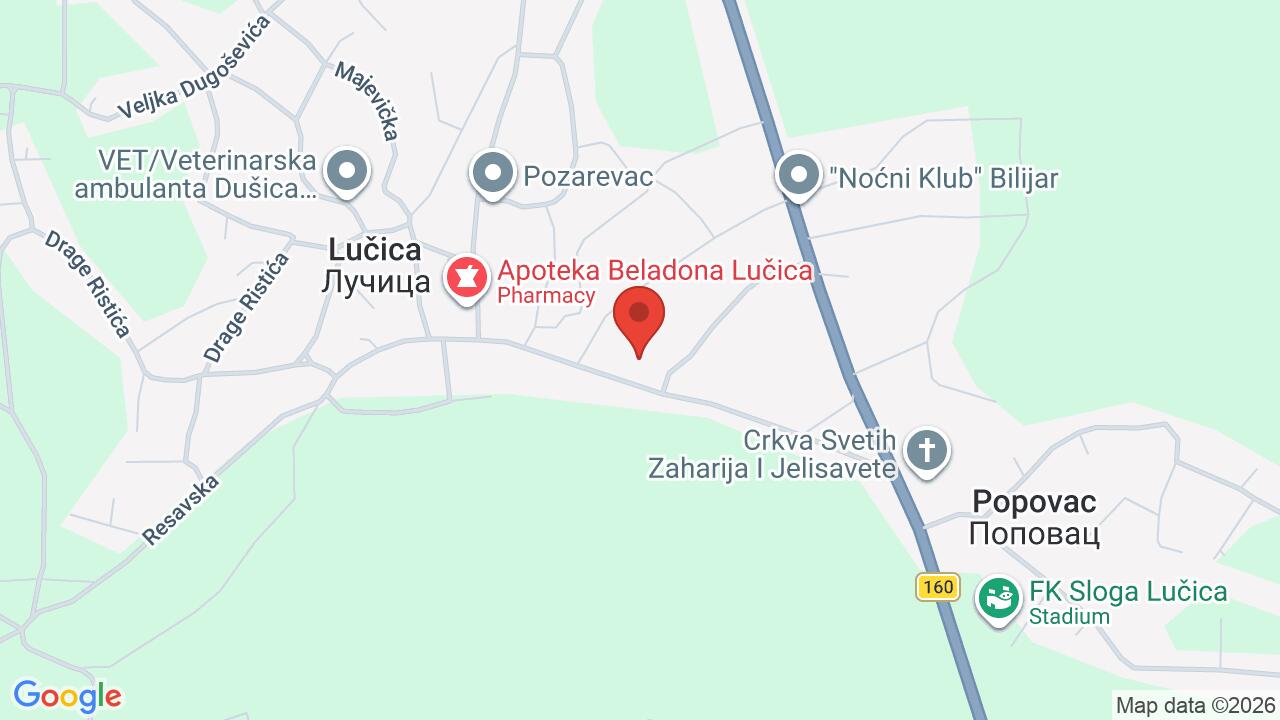
Organizer: Sense Behavior (Юлия Козлова) & Семейное пространство Enter If you are planning kindergarten adaptation or already notice morning tears, fatigue or evening meltdowns in your child, join a free meeting with behavioral analyst Yulia Kozlova from Sense Behavior. We will discuss what is normal in adaptation and what needs closer attention, and provide simple practical actions you can try at home this week. The meeting is on October 9 at 18:00, without children, with time for your specific questions. Free event with drinks and treats. This announcement was found and posted by KiddoDoo editors. Like it and we will find out all the details and exact schedule. If you are planning kindergarten adaptation or have been attending for a while but notice morning tears, fatigue or evening meltdowns in your child — we organized a meeting for you with behavioral analyst from Sense Behavior (link) Yulia Kozlova (telegram link). She works with children who find adaptation especially difficult and knows many simple, practical techniques that can ease adaptation. October 9 at 18:00 — we will talk about what is normal in adaptation and what is already a reason to pay closer attention, and what you can do at home this week. There will be time for your specific questions — not necessarily about kindergarten; any similar situation will do: adaptation to groups in extracurricular centers, for example. The meeting is free, without children, with drinks and treats. Register here (link) 📍 Family space Enter, Resavska 34 (link)
Q&A:
Most questions are answered by the organizer, but community members can also answer.
Contacts
Kiddodoo MessagesSchedule & Booking:
We verified the schedule less than 24 hours ago. Book with confidence, guaranteed best price.
Skills & Interests
Managing emotional responses constructively; not suppressing emotion or controlling every impulse.
more «Emotional regulation» →Activities designed to help children express and understand their emotions in a safe, caring atmosphere. With guidance from a trained psychologist, they explore creative ways to cope with stress, build self-confidence, and feel understood.
more «psy_support» →Current needs for choice, achievable difficulty, and an outlet for self-expression. Includes Choice, Challenge, and Expression. Excludes enduring abilities such as confidence, resilience, independence, creativity, and communication; personality or temperament labels; performance outcomes; and pressure to achieve. Why it matters: meaningful choice, achievable challenge, and opportunities for expression can support engagement and a sense of competence and ownership in the child's experience. Boundary rule: terms are included together when they point to the same thing the child currently seeks or lacks; a nearby concept stays separate when it is a feeling, a developable ability, or a different need. Activity direction: +1 or +2 means this need may become stronger or remain less met; −1 or −2 means the activity may help meet it and therefore reduce it. A magnitude of 2 is a stronger theoretical direction than 1, not a measurement or guarantee for an individual child.
more «Agency and growth» →Recognizing stress signals and using safe, age-appropriate strategies or support to return to a manageable state; not absence of stress, relaxation alone, or treatment.
more «Stress management» →Where?
Run activities for kids?
Reach families who are a real match. Post your classes, camps and programs to the open catalog. Kiddodoo shows them to parents whose children are genuinely exploring what you offer, not just anyone within 5 km.
Get startedThis page is from the Kid-do-doo app. Install the app to see the details.
Parenting, made clearer — and less scattered
Understand what may be happening with your child — and find real-world ways to support the next step.
This page is from the Kid-do-doo app. Install the app to see the details.
Parenting, made clearer — and less scattered
Understand what may be happening with your child — and find real-world ways to support the next step.
Schedule:
We verified the schedule less than 24 hours ago. Book with confidence, guaranteed best price.